The awesome Samsung Odyssey G9 G95C is $500 off, comes with free second monitor!

Samsung Odyssey G9 Series G95C monitor

Are you looking to get an excellent gaming monitor? Here’s a nice deal for you. The Samsung Odyssey G9 G95C is large, curved, and ultrawide. It’s also $500 off, and Samsung is throwing in a 27-inch Samsung Odyssey G55C monitor for free. This amounts to $799.99 in savings!

Buy the Samsung Odyssey G9 G95C curved monitor with free G55C monitor for $799.99 ($799.99 off)

Google is readying Android 16’s Live Updates for Wear OS and we couldn’t be happier

google pixel watch wear os watch face pixel watch 2 face i 2

Credit: Rita El Khoury / Android Authority
  • Google has confirmed that Android 16’s Live Updates are headed to Wear OS.
  • The feature will be introduced on Wear OS wearables in 2026.
  • Google could integrate Live Updates with Wear OS Tiles or introduce an entirely new system to deliver them.

Live Updates is one of the most talked-about features in Android 16. Finally, Android users will be able to track real-time progress of activities from delivery, rideshare, and navigation apps on their home screens. It’s a feature iPhone users have enjoyed for a while now, but Android’s implementation already seems better from what we’ve seen so far. Yesterday, we told you that Android’s Live Updates won’t be limited to Pixel phones and are coming to more supported Android handsets. Well, as it turns out, the feature is traversing form factors and is also headed for your wrists.

Here’s my favorite smartphone deal right now: Google Pixel 9

Google Pixel 9 Peony color in hand

Credit: C. Scott Brown / Android Authority

All those fancy new premium phones are exciting, but I am not that hyped up about paying a grand or more for them. Especially when there are plenty of great phones for much less, especially if you can take advantage of a deal like this one. If I were to buy a phone today, I would spend my hard-earned cash on a Google Pixel 9, which you can currently get for just $599.

Buy the Google Pixel 9 for just $599 ($200 off)

‘Find My Device’ on your Android phone is now called ‘Find Hub’ as Google rolls out update

chipolo pop bluetooth tracker with google find my device 2

Credit: Rita El Khoury / Android Authority
  • Google has officially switched the Find My Device app to Find Hub.
  • The service has been renamed across the Play Store, your phones, and the web.
  • The new Find Hub app also includes a few changes that help separate device-finding and location settings.

Google has officially begun rolling out the Find My Device rebranding update announced last week during The Android Show. The app is now called Find Hub, and users will notice the new name on their home screens, replacing the previous “Find Device” label.

Google confirms Android 16’s flashiest trick is not just reserved for Pixel phones

  • Google has confirmed that Android 16’s Live Update will arrive on Samsung, OnePlus, vivo, and Xiaomi devices, apart from Pixel phones.
  • Samsung will integrate Live Updates into its Now Bar, something a recent One UI 8 leak also showcased.
  • OnePlus will introduce the feature through its Live Alerts system, while vivo and Xiaomi plan to incorporate Live Updates into their own custom skins.

Google has confirmed that one of Android 16‘s standout features — Live Updates — will not be limited to Pixel devices. The feature will also roll out to smartphones from Samsung, OnePlus, vivo, and Xiaomi later this year.

Live Updates, first introduced with the Android 16 beta, offers real-time progress notifications for apps such as food delivery, rideshare, and navigation services. Instead of opening individual apps, users can view live updates, such as when an Uber is arriving or how far along a delivery is, directly on their lock or home screens.

Catfishing via ChatGPT: A Deep Cybersecurity Concern

The rapid advancement of artificial intelligence (AI) and natural language processing technologies has revolutionized the way we interact online. Tools like ChatGPT, which leverage deep learning models to generate human-like responses, have become commonplace in various fields—ranging from customer service to content creation. However, while these technologies offer great benefits, they also introduce new security risks, particularly in the realm of social engineering and online deception. One such threat gaining attention is catfishing via ChatGPT, a sophisticated form of online manipulation that poses a serious cybersecurity concern.

What is Catfishing?

Catfishing refers to the act of creating a fake online persona to deceive or manipulate others. This could involve impersonating someone else for malicious purposes—whether to emotionally manipulate, scam, or extort a victim. Traditionally, catfishing involves individuals using fake profiles on social media or dating apps to trick people into romantic or financial exploitation. But with the rise of AI tools like ChatGPT, catfishing has entered a new, more dangerous phase, where automated systems are used to convincingly deceive users without human involvement.

ChatGPT and Its Role in Catfishing

ChatGPT, a language model developed by OpenAI, has garnered global attention for its ability to simulate human-like conversations. By understanding and generating natural language, it can converse on a variety of topics, making it an attractive tool for those seeking to deceive others. With its ability to mimic conversational patterns and generate coherent, personalized responses, ChatGPT is increasingly being used by malicious actors for automated catfishing.

Unlike traditional catfishers, who rely on extensive personal interactions to manipulate their victims, AI-based catfishing can operate at scale. A single malicious actor could potentially use ChatGPT to create a network of fake personas, each capable of engaging victims in personalized conversations over a wide range of platforms, from social media to email.

The Growing Threat of AI-Powered Catfishing

AI-powered catfishing is particularly concerning for several reasons:

1. Scalability and Automation: Traditional catfishing often involves one-on-one interactions, making it labor-intensive for perpetrators. With ChatGPT, scammers can scale their efforts by automating conversations, engaging with multiple victims simultaneously. This increases the reach and potential impact of their malicious activities.

2. Increased Realism and Credibility: The key strength of ChatGPT lies in its ability to generate human-like text. This makes it harder for users to distinguish between genuine individuals and AI-driven personas. With enough context and personalization, AI models can create convincing interactions that are virtually indistinguishable from real conversations, leading victims to trust and confide in the fake personas.

3. Psychological Manipulation: ChatGPT’s capacity to understand and respond empathetically allows it to manipulate emotions effectively. Malicious actors can leverage this to create highly convincing catfishing scenarios, playing on the vulnerabilities of victims—whether it’s seeking companionship, financial help, or other emotional needs. This level of psychological manipulation can lead to significant emotional distress and, in some cases, financial loss.

4. Exploitation of Personal Information: AI models can also be trained to gather and analyze vast amounts of personal data from public sources. This enables scammers to craft highly personalized and tailored conversations, making it easier to exploit individuals. Whether it’s using a victim’s interests or life events against them, the ability to customize interactions significantly increases the success rate of these attacks.

5. Difficult to Detect: Detecting AI-driven catfishing is a complex challenge. Since the interactions often appear natural and responsive, many victims may not recognize the scam until it’s too late. Additionally, because these AI models can adapt their responses in real-time, they can avoid the telltale signs that might otherwise alert a user to a scam.

Real-World Examples and Impact

There have already been instances where AI, including models like ChatGPT, has been employed to carry out sophisticated catfishing schemes. For instance, scammers may use AI to create fake dating profiles, engage victims in lengthy conversations, and build emotional connections before eventually asking for money, gifts, or other forms of support. The emotional manipulation involved can be so convincing that victims often fail to recognize the scam until they’ve suffered financial or emotional harm.

One particularly alarming example involved a series of AI-driven scams targeting vulnerable individuals in online dating apps. Victims were initially engaged in friendly conversations before being coerced into sending money to support fabricated stories—such as a “military deployment” or a “medical emergency.” While AI was not directly responsible for these schemes, it could easily enhance the scalability and effectiveness of such fraudulent operations.

Combating AI-Powered Catfishing

To address the growing threat of AI-powered catfishing, both individuals and organizations must adopt proactive measures:

1. Awareness and Education: One of the most effective ways to prevent catfishing is through awareness. Users need to be educated about the risks associated with online interactions, especially when communicating with strangers. Awareness campaigns can help individuals recognize the red flags of catfishing, such as requests for money, pressure to share sensitive personal information, or the creation of an overly emotional or urgent narrative.

2. Enhanced Detection Tools: As AI becomes more advanced, so must the tools used to detect AI-generated content. AI-powered catfishing will require the development of new detection mechanisms that can differentiate between human and machine-generated interactions. Companies, particularly those operating social media platforms, should invest in such technologies to prevent the misuse of AI for deceptive purposes.

3. Regulations and Policies: Governments and tech companies need to collaborate on developing policies and regulations to prevent the misuse of AI technologies for harmful purposes like catfishing. This includes enforcing stricter guidelines on the creation and use of AI-powered bots on platforms and holding perpetrators accountable for their actions.

4. AI for Good: Interestingly, AI itself can be part of the solution. Developers can create AI systems designed to flag and report suspicious activity online, such as fake profiles or manipulative messaging. By harnessing AI for positive purposes, it’s possible to detect and thwart catfishing attempts before they do significant harm.

Conclusion

While ChatGPT and similar AI technologies have the potential to revolutionize communication and productivity, they also pose new cybersecurity risks, particularly in the realm of social engineering and catfishing. As AI continues to advance, so too do the methods employed by malicious actors to exploit it.

Individuals must be vigilant when interacting with others online, especially when emotions or financial requests are involved. By understanding the risks associated with AI-driven deception, we can better protect ourselves and others from falling victim to sophisticated scams. Simultaneously, developers, tech companies, and governments must work together to combat this emerging threat and ensure that AI technologies are used ethically and responsibly.

As AI becomes more integrated into our online lives, it’s critical that we remain aware of both its potential and its dangers—catfishing via ChatGPT is just one example of how this powerful technology can be misused, and it’s up to all of us to stay one step ahead in the fight against digital deception.

The post Catfishing via ChatGPT: A Deep Cybersecurity Concern first appeared on Cybersecurity Insiders.

The post Catfishing via ChatGPT: A Deep Cybersecurity Concern appeared first on Cybersecurity Insiders.


Google Warns Users About Phishing Scam Targeting 2 Billion Active Accounts

Google has recently issued a security alert regarding a sophisticated phishing scam that is targeting its massive user base of 2 billion active accounts. The company has made it clear that emails coming from the address “no-reply@accounts dot google dot com” are fraudulent and have nothing to do with Google or its services. These deceptive emails are claiming that user data has been compromised or leaked and that immediate action is required, but in reality, they are part of a scam designed to steal personal information.

The Phishing Scam Explained

Over the past two weeks, users, particularly those residing in major metropolitan areas in the United States, have reported receiving emails that seem to come from a legitimate source—Google itself. The emails appear to be official communications, which makes them particularly dangerous. They encourage recipients to click on embedded links, which purportedly lead to government actions requiring access to their data. The message warns that the user’s data may contain blasphemous content or material that threatens national security, and that it needs to be reviewed by government authorities.

The email even goes as far as to claim that it is acting under a subpoena from the U.S. government, further convincing the recipient of its authenticity. However, Google has categorically stated that it does not, nor will it ever, send emails requesting users to share sensitive information such as passwords, one-time passcodes (OTPs), or biometric data. These types of requests are clear signs of phishing attempts, and users are urged to stay vigilant.

The Dangers of Clicking Links in Phishing Emails

The primary danger of these phishing emails lies in the links they contain. Clicking on these links can direct users to fake, malicious web pages that are designed to harvest sensitive information like login credentials, financial details, and other personal data. These fraudulent pages may appear convincingly real, and some even claim to be official Google or government portals. However, once the victim enters their personal information, the attackers gain full access to their accounts, putting them at risk of identity theft, financial loss, and even legal trouble.

To make matters worse, these fake web pages often carry threats of legal action against the victim, warning them of potential criminal charges related to illegal data use or internet misuse. This tactic creates unnecessary fear, pressuring victims into complying with the fraudsters’ demands.

A New Level of Deception: Using Gmail as a Gateway

In the past, cybercriminals have mostly relied on fake emails related to delivery services like FedEx, UPS, and DHL Express to lure users into clicking on malicious links. These scams typically involve fake tracking updates, pushing users to disclose their personal identifiable information (PII). However, this latest phishing scam marks a worrying escalation. Cybercriminals are now leveraging one of the most widely used and trusted services in the world—Gmail—to distribute their malicious content.

Since Gmail is an essential tool for billions of people worldwide, hackers see it as a prime target. The fact that these fraudulent emails are being sent from an email address hosted on Google’s own servers adds an alarming layer of authenticity to the scam, making it even harder for users to spot the fraud. It raises questions about whether Google needs to implement stricter security measures to prevent its own platform from being used as a vehicle for such attacks.

Google’s Response and User Advice

Google has advised all Gmail users to remain cautious and not to click on any links or follow instructions in emails that request personal information or seem suspicious in nature. The company strongly recommends that users report any phishing attempts and delete such emails immediately.

Furthermore, users are encouraged to keep their devices up-to-date with the latest security patches and use strong, reputable anti-malware solutions to protect themselves from threats. This includes ensuring that their operating systems, browsers, and other software are fully updated to patch vulnerabilities that could be exploited by attackers.

Conclusion: Staying Safe in a Digital Age

With cybercrime continuing to evolve, it’s more important than ever to be aware of phishing scams and the tactics used by cybercriminals. While Google has taken steps to warn its users, the responsibility ultimately lies with individuals to stay informed and cautious. By remaining vigilant and adopting good cybersecurity practices, users can better protect themselves from falling victim to these ever-growing threats.

Despite Google’s efforts to safeguard its platform, the fact that phishing emails are being sent from its own servers underscores the need for further action and security enhancements. As we continue to rely on digital services, maintaining a high level of awareness and security is essential to avoiding scams and protecting our personal data.

The post Google Warns Users About Phishing Scam Targeting 2 Billion Active Accounts first appeared on Cybersecurity Insiders.

The post Google Warns Users About Phishing Scam Targeting 2 Billion Active Accounts appeared first on Cybersecurity Insiders.

Android 16 QPR1 Beta 1 brings lock screen clock customization to Pixel Tablet

google pixel tablet photo frame 2

Credit: Rita El Khoury / Android Authority
  • Android 16 QPR1 Beta 1 adds lock screen clock customization to the Pixel Tablet.
  • The new beta allows users to adjust the style, color, and size of the lock screen clock on the slate.
  • It looks like you can choose from five different clock styles.

Google’s new Material 3 Expressive design direction in Android 16 is all about making the user experience more lively and playful. Along with fresh fonts, icons, and new UI components, Google continues to prioritize user control and customization. In line with its mission to make Android feel more personal, the company is now rolling out new lock screen clock customization options not only on Pixel phones, but finally, also on the Pixel Tablet.

Wear OS 5 killed Facer watchfaces, but Wear OS 6 will bring them back to life

  • Facer announced it will be returning to Wear OS devices this fall.
  • Wear OS 6 will support compatibility with the app’s custom watch faces in Watch Face Format.
  • The updated Facer experience will include more than 500,000 faces, instant syncing, and a versatile pricing structure.

In the wake of Google I/O 2025, long-running watch face customization platform Facer has announced a major update. With a revamped app, Facer watch faces will make a full return to Wear OS smartwatches. Alongside Wear OS 6, the app’s update aims to resolve compatibility issues introduced by Google’s Watch Face Format transition in 2024.

When Google launched Wear OS 5 and made Watch Face Format mandatory, it left users without access to long-favored custom watch face apps like Facer, WatchMaker, and many more. As of today, users can expect the return of at least one of these apps: Wear OS 6 will offer expanded support for third-party watch faces, including a full Facer experience.

The new Moto Razr faces an unexpected delay at Verizon

  • Verizon, as well as MVNOs that use its network, have delayed the availability of the Motorola Razr to May 22.
  • The original launch date of the Razr was May 15, and this delay only affects Verizon, as other carriers are not affected.
  • There has been no official reason given for the delay.

Fans of Motorola’s iconic flip phone, the Razr, have been able to get the new 2025 model since May 15. At least, if you have a carrier that isn’t Verizon, or any of its associated MVNOs. If you are a Verizon customer and still wondering why you’re not able to get your hands on the new Moto Razr just yet, well, there’s a reason for that, kind of.

Verizon has confirmed that the Moto Razr is now launching on May 22, rather than the original launch date of May 15 like other carriers. This delay also applies to customers on Straight Talk, Visible, Total Wireless, and Verizon prepaid accounts. Previously, Verizon and the MVNOs had the Moto Razr listed for purchase beginning May 15, but they have all been removed as of now. If you search for Motorola phones on Verizon’s site, you’ll currently only see the Motorola Edge Plus and Moto G Play 2024.

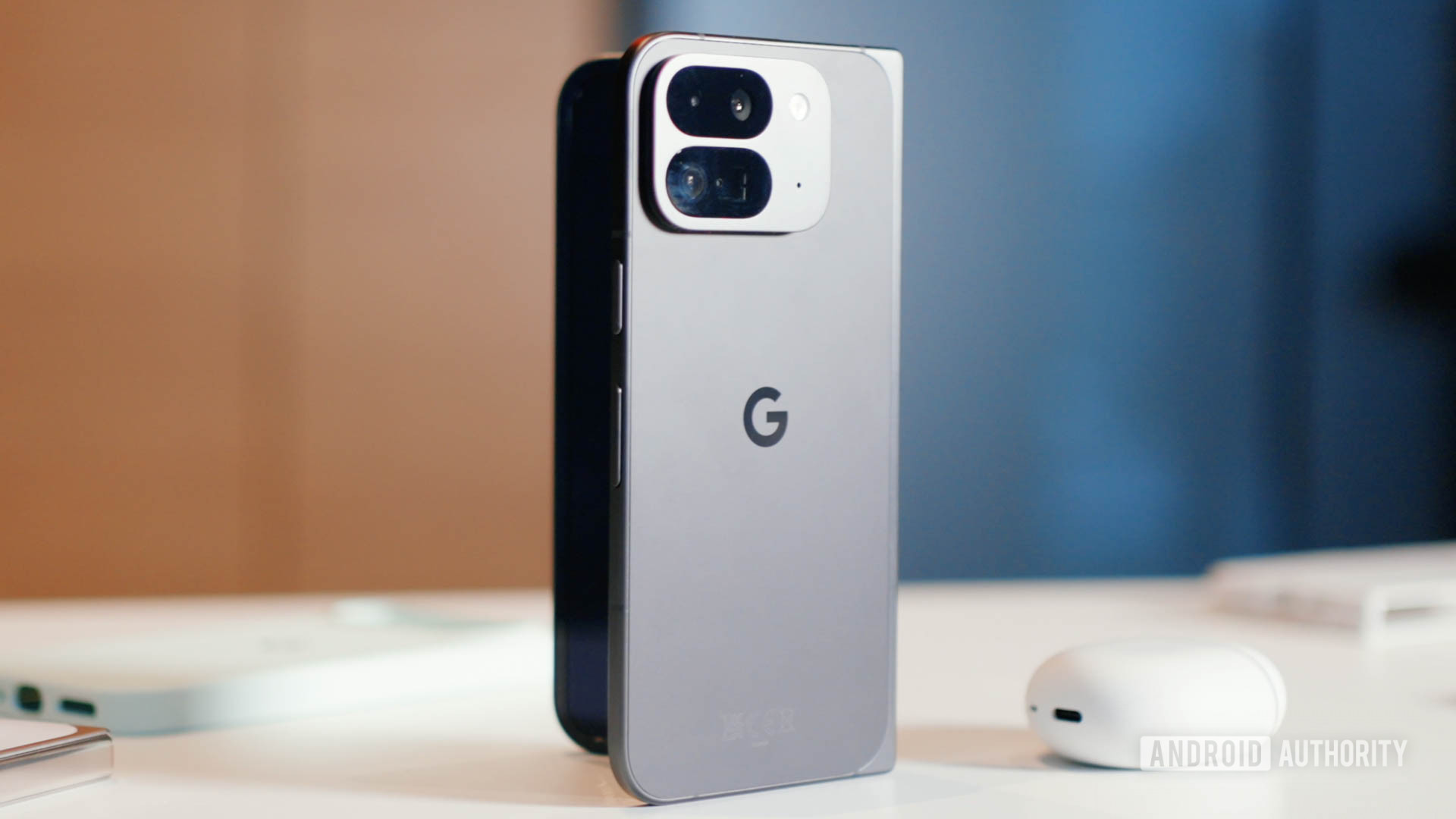
Save $300 on the Google Pixel 9 Pro Fold

Google Pixel 9 Pro Fold standing upright on a table

Credit: C. Scott Brown / Android Authority

Are you looking for a foldable phone? The Google Pixel 9 Pro Fold or the Samsung Galaxy Z Fold 6 are your best bets. Today, we’re highlighting Google’s device, which is currently discounted to $1499, saving you $300. The Samsung Galaxy Z Fold 6 is also on sale, but it is slightly more expensive. Keep reading to learn more about that deal.

Buy the Google Pixel 9 Pro Fold for $1,499 ($300 off)

Some Nest speakers are glowing blue and purple, and there’s a good reason for it

Google Nest Audio with Gemini models demo

Credit: Ryan Haines / Android Authority
  • Some Nest Audio and Nest Mini users are seeing blue and purple colors on their devices instead of the usual white lights.
  • The change marks the presence of Gemini and seems to be appearing for users enrolled in the Google Home Public Preview program with experimental AI features enabled.
  • One user reported that their Nest Audio became unresponsive after the Gemini lights started showing up.

A number of Google Nest Audio users on Reddit have reported an unusual sight on their devices. Instead of the usual white LED lights, their speakers have started displaying a blue and purple gradient. While the change is subtle, it’s quite noticeable and raising questions.

Hate the small Galaxy S25 Edge battery? You’ll laugh at these leaked iPhone 17 Air battery details

iPhone 17 Air mock up

  • The iPhone 17 Air is rumored to be just 5.5mm thick, making it even thinner than the Galaxy S25 Edge.
  • A new leak suggests the phone could have a laughable 2,800mAh battery, over 1,000mAh smaller than the Galaxy S25 Edge’s already criticized 3,900mAh cell.
  • Apple is expected to rely on high-density battery tech and optional battery cases to offset the small capacity.

The Galaxy S25 Edge didn’t launch with the kind of applause Samsung was hoping for. While the phone’s 5.8mm thickness is commendable, fans have been largely unimpressed with its 3,900mAh battery, especially considering the phone is pricier than the Galaxy S25 Plus, which features a much more robust 4,900mAh cell. This is why a recent survey conducted on Android Authority showed results that lean toward the Galaxy S25 Edge being a flop.

This compact Lenovo gaming tablet shouldn’t be one of the best Android tablets, but it is

It’s hard to feel genuinely excited about Android tablets these days. The market has become homogenized over the years, offering options that all blur together. Samsung’s got tablets for every price bracket, Amazon’s got its Fire lineup of tablets on a budget, and everyone else is just… kind of there. They mostly look the same, feel the same, and try to do the same things, just with different logos slapped on top.

So when Lenovo sent me a “gaming tablet” to test, I was intrigued. What does a gaming tablet even look like? Does it come with RGB and shoulder triggers? I’ve spent the past three weeks with the Lenovo Legion Tab Gen 3, and spoiler alert, it doesn’t come with any of those. The good news is that it is a gaming tablet, all right.

Good Lock’s newest feature promised me home screen freedom, but delivered total chaos

When Samsung started overhauling Good Lock for One UI 7, Home Up was one of the modules that saw the biggest changes. Most of those changes were good, letting you modify edge panels, the taskbar (on Folds and tablets), the overview screen, and the home screen itself. As welcome as those features are, I found one of the additions harder to appreciate. DIY Home has a lot of potential, but despite the wonderfully awful home screens you can create with it, the implementation is flawed and reminds me of the worst days of Microsoft’s Windows experiments.

DIY Home: What is it and why do I hate it?

DIY Home removes all of the guardrails usually placed on home screen customisation. Grid, icon, and widget sizes are unrestricted, and you can put everything, everywhere, all at once. On the surface, that sounds pretty cool. Moving every element to exactly where you want it without any restrictions could lead to some cool setups and maybe a renaissance of the old custom launcher days. I initially hoped for that, but it hasn’t worked out. The way DIY Home has been implemented is almost unusable, and I can’t bring myself to use it for any longer than is needed.

-- Get the right stuff from a partner you trust. --

Partners

-- IT NEWS --

Blog

admin December 11th, 2025

Credit: Edgar Cervantes / Android Authority TL;DR Spotify is getting a new “Prompted Playlist” feature to help users create more […]

admin December 11th, 2025

TL;DR Four of the best Good Lock modules aren’t working properly on the One UI 8.5 beta. Home Up and […]

admin December 10th, 2025

This is an open thread. We want to hear from you! Share your thoughts in the comments and vote in […]