LineageOS 22.1 brings Android 15 to your old Android phone

  • LineageOS 22.1 based on Android 15 QPR1 is now available for over 100 devices.
  • The latest version of LineageOS brings Android 15 changes as well as a new music player and PDF reader.
  • LineageOS 21 is still around for devices that aren’t supported by 22.1, but 20 is on the way out.

A lot of amazing Android phones are released every year, but for many people, there’s no impetus to upgrade their phone unless the hardware is on the verge of failure. Many people will happily use their phone for years after the manufacturer ends official software support, but this means they’ll miss out on new software features and security fixes introduced in newer Android releases. Plus, over time, their phone’s performance might degrade due to factors like accumulated data and potential software bloat. This is why some people choose to install aftermarket Android-based distributions like LineageOS, which just got updated to bring in the latest changes from the Android 15 release.

LineageOS 22.1 based on Android 15 (QPR1) was made official today by the project’s team. The team has been hard at work developing LineageOS 22.1 after the Android 15 source code was released back in September, and thanks to their previous efforts to adapt Google’s UI-centric changes in earlier Android releases, they were able to rebase their project on top of Android 15 faster than they expected.

Exclusive: OnePlus Watch 3 Pro and OPPO’s rebranded versions in the works

A user reviews some of the Google apps available on their OnePlus Watch 2.

Credit: Kaitlyn Cimino / Android Authority
  • OnePlus is making a Pro version of its flagship Wear OS smartwatch this year.
  • We’ve spotted the OnePlus Watch 3 Pro moniker in the OHealth app.
  • We can also confirm that OPPO will release rebranded versions of the OnePlus Watch 3 and OnePlus Watch 3 Pro as part of its Watch X2 lineup.

OnePlus is getting ready to launch a new flagship Wear OS smartwatch in the form of the OnePlus Watch 3, successor to last year’s robust OnePlus Watch 2. We’ve already seen multiple leaks offering up information on the OnePlus Watch 3’s design and specs. The wearable is expected to feature a rotary dial, an updated heart rate sensor with ECG measuring capabilities, smaller bezels, and a bigger battery. We can now confirm that OnePlus is also making a Pro version of the OnePlus Watch 3.

Spotify search results for popular artists reveal NSFW videos

Spotify stock photo 2

Credit: Edgar Cervantes / Android Authority
  • Spotify search results for popular artists have been surfacing porn videos for many users.
  • The platform removed some flagged clips, but poor moderation is evident from how long the videos have remained online.

It looks like Spotify has a content moderation problem on its hands. Searches for popular artists on the music streaming platform have surfaced porn videos, as spotted by Reddit users and later verified by The Verge.

Google plans for a ‘high-stake’ 2025 betting on major Gemini push

Google Gemini logo on smartphone stock photo (7)

Credit: Edgar Cervantes / Android Authority
  • Google executives recently held a strategy meeting to outline the company’s high-stakes 2025 goals.
  • They highlighted Gemini as the centerpiece of the company’s plans, with promises of major upgrades and innovation.
  • A key priority is scaling Gemini on the consumer side, aiming to reach half a billion monthly users.

Google is gearing up for an even bigger AI push in 2025, with the spotlight fixed firmly on its Gemini LLM. At a recent internal strategy meeting — complete with festive holiday sweaters — CEO Sundar Pichai and other top Google leaders left no doubt that Gemini will be the star of the show heading into the new year, following a 2024 already dominated by Gemini-related announcements. (h/t: CNBC)

During the December gathering at Google’s Mountain View headquarters, Pichai told staff that “the stakes are high” as the company navigates increasing competition, especially in AI. Gemini is slated to continue its rapid expansion into 2025, with the ultimate goal of becoming the 16th Google product to reach 500 million monthly users.

Your Android Auto dashboard just got a major style upgrade

Android Auto 2024 YouTube Music

Credit: C. Scott Brown / Android Authority
  • Android Auto version 13.4 is rolling out a refreshed media player UI.
  • This update brings smaller album art, rearranged buttons, and a relocated progress bar.
  • A new font completes the makeover, adding a polished look to the updated interface.

Android Auto users are about to get a noticeable shake-up in their in-car listening experience. Google has begun rolling out a refreshed media player as part of Android Auto version 13.4, marking one of the bigger interface changes for the platform since its major revamp last year. First spotted by 9to5Google, many Android Auto users are starting to see this new design right now.

One of the first things you’ll spot in the updated player is the smaller album art, which has been moved to the left side. In the previous design, the media progress bar was underneath the cover art. Now, it’s parked on the right side of the album art.

Take my money: These are the apps I gladly pay for every month

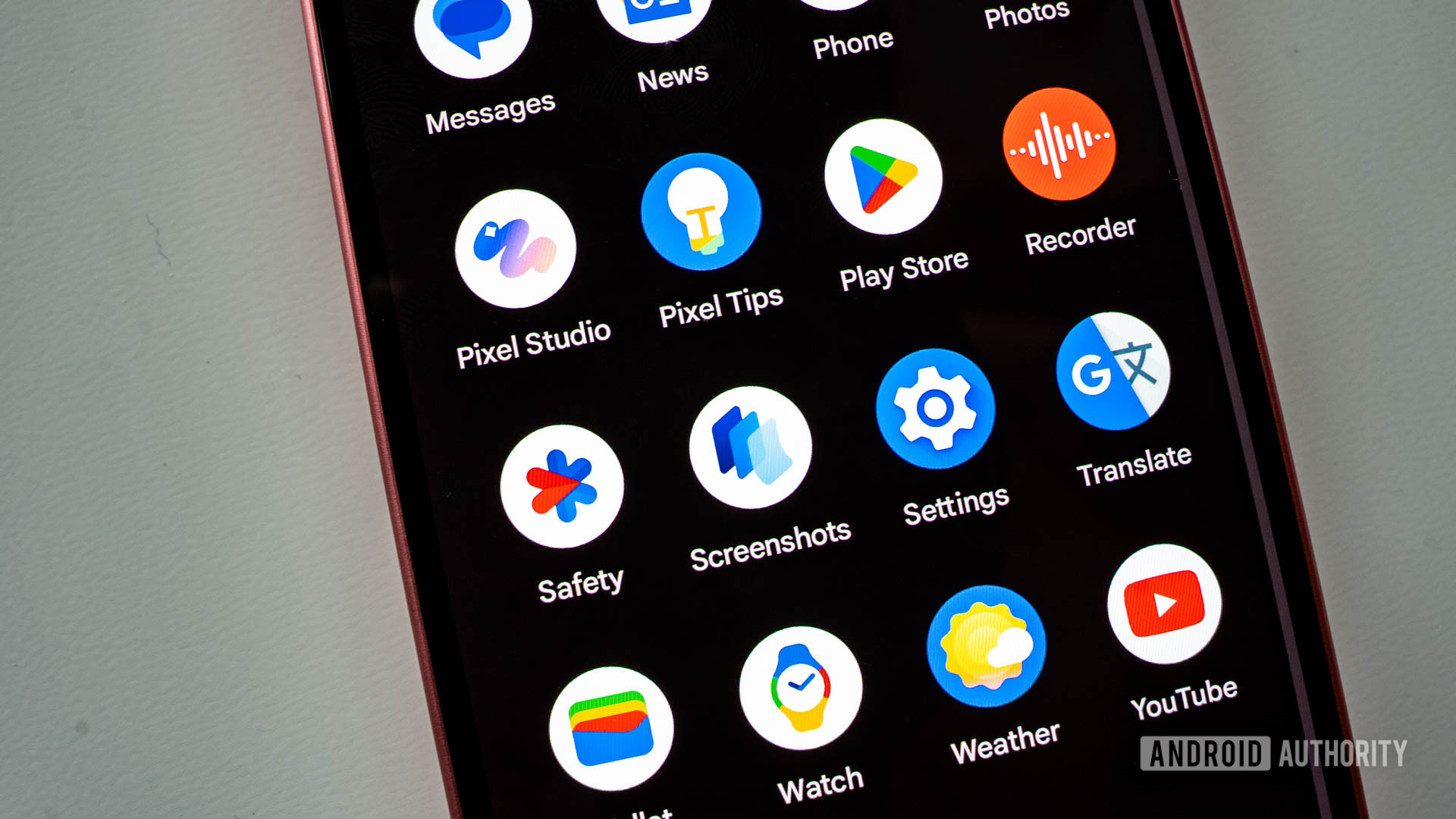
Google Pixel 9 app drawer with new Screenshots, Pixel Studio, and Weather apps

Credit: C. Scott Brown / Android Authority

It seems like every other app offers a subscription these days, and I’m not a fan. I prefer apps that are free, even if I have to watch an ad or two in exchange. And I definitely miss the days when I paid a one-time fee to get rid of them instead of paying a monthly subscription.

However, there are a few exceptions. I pay for four apps on a monthly basis and have zero regrets. These apps are well worth the money, as they help me stay on top of my job, personal life, and money. Well, at least three of them. The fourth one is just for entertainment purposes, which is something we all need in life.

Deal: Save $50 on the amazing TP-Link Archer GXE75 Wi-Fi 6E Gaming Router

TP Link Archer GXE75 Wi Fi 6E Gaming Router

Credit:

Gaming is no cheap hobby. You’ll suddenly find yourself wanting to get a whole bunch of other specialized accessories and peripherals. These are not all about aesthetics, either. Specialized gaming products are made to meet the high standards gaming requires to get the best performance. This means they are usually high-end and pricey. If you’ve been looking for a gaming router, here’s your chance to save a bit! The TP-Link Archer GXE75 Wi-Fi 6E Gaming Router is quite the beast, and it’s currently 20% off, bringing the cost down to $199.98

Get the TP-Link Archer GXE75 Wi-Fi 6E Gaming Router for $199.98

Next-generation Gorilla Armor may debut to protect the Samsung Galaxy S25 Ultra

  • Samsung introduced Gorilla Armor on the Galaxy S24 Ultra earlier this past January.
  • For the upcoming Galaxy S25 series, a second-gen Gorilla Armor could be featured on the Ultra model.
  • Following widespread reports of issues with screen coatings, though, we’re slightly concerned about how they’ll last.

With January only a few short days away, it feels like all the Android world is talking about anymore is Samsung’s upcoming launch of its Galaxy S25 smartphones. Today alone we’ve looked at everything from news about support for seamless updates to Samsung’s plans for a Galaxy S25 Slim. Now we’re talking about the Galaxy S25 Ultra in particular, and a new rumor about what to expect from its screen protection.

Flash back to last January, and we were learning about Samsung and Corning teaming up to exclusively introduce the new Gorilla Armor glass for the S24 Ultra’s screen. The extra-tough Gorilla Glass was supposed to keep that expensive phone’s screen looking its best, thanks to ion-exchange treatment greatly enhancing the glass’s natural properties. Eventually, other manufacturers started adopting Gorilla Armor themselves, but it was Samsung and the S24 Ultra that really got to show it off.

Is ChatGPT not working for you? Here’s how you can try to fix it (Updated: Overall fix incoming)

ChatGPT stock photo 11

Credit: Edgar Cervantes / Android Authority

Update: December 26, 2024 (22:44 PM ET): You’re not alone if you’re having trouble using ChatGPT today. We’re fielding a swarm of reports of problems across OpenAI services right now. Down Detector started spiking this afternoon, and OpenAI’s own status page reports that “ChatGPT, the API, and Sora [are] currently experiencing high error rates.”

As of 9 PM ET, OpenAI’s status page noted that while ChatGPT is mostly recovered, work is still ongoing on an overall fix. There has been no update since that time.

Check out these deals on awesome power stations from Anker, Jackery, and DJI

Anker SOLIX C1000 featured image - power station

Battery anxiety is a serious issue for many of us. We no longer need to worry so much about whether our devices will make it through the day, but some of us have more demanding needs. It’s pretty easy to run out of juice in the middle of a camping trip, power outage, or during your work travels. This is when a good power station comes in handy, but boy, are these pricey! If you want to be more gentle on your wallet, here are a few days on amazing power stations from Anker, Jackery, and DJI, three of the most recognized brands in this category.

Buy the Anker SOLIX C300 Portable Power Station for $189.99 ($60 off)

A new One UI 7 beta rumor is here to dampen your Christmas spirits

One UI 7 S24 Ultra hero wide

Credit: Stephen Schenck / Android Authority
  • Samsung could end up skipping the One UI 7 beta rollout for other Galaxy phones.
  • According to a leaker, the Galaxy S24 series will be the only one to participate in Samsung’s Android 15 beta program.
  • Older Galaxy phones could straightaway get the stable One UI 7 release.

A new One UI 7 rumor is here to put a dampener on your holiday mood. According to X leaker FamilyTaes, who previously leaked a One UI 7 beta roadmap, the Android 15-based beta software may not come to any other Samsung phone except for the Galaxy S24 series.

One UI 7 is adding even more continuity features between your Galaxy phone and Galaxy Book

  • Samsung is introducing a new camera continuity feature in its upcoming One UI 7 update.
  • Camera continuity lets you take photos and scan documents on your Galaxy phone then continue working on them on your Galaxy tablet or PC.
  • This will work with the Samsung Notes and Samsung Internet apps, but the functionality isn’t live yet.

One of the best reasons to buy a Samsung phone is so you can tap into Samsung’s ever-growing ecosystem. Samsung has built a whole suite of apps and services that are available across its devices, and they’ve also created a number of software features that take advantage of that fact. The “continue apps on other devices” feature, for example, lets you pick up right where you left off when using the Samsung Internet or Samsung Notes apps. With the upcoming One UI 7 update, this feature is going to get even better thanks to the addition of camera continuity.

Top Trends in SaaS Security Testing: Safeguarding the Cloud in 2024

As Software-as-a-Service (SaaS) solutions continue to dominate the enterprise landscape, securing these cloud-based applications has become more critical than ever. With businesses increasingly relying on SaaS platforms to handle everything from customer relationship management (CRM) to enterprise resource planning (ERP) and even sensitive financial data, the risk of security vulnerabilities grows. The growing number of data breaches, cyberattacks, and compliance requirements makes it essential to adopt proactive security testing practices.

Here are the top trends in SaaS security testing that are shaping how organizations protect their applications and data in the cloud:

1. Shift-Left Security Testing: Proactive Risk Mitigation

The concept of “Shift-Left” security—integrating security testing earlier in the software development lifecycle (SDLC)—is gaining significant traction in the SaaS security space. Traditionally, security testing often occurred late in the development process, sometimes even after the application had been deployed. This approach led to delayed patching and increased the potential for vulnerabilities in production environments.

In 2024, more organizations are adopting the Shift-Left philosophy, embedding security testing from the start of the development cycle. This includes implementing automated security testing tools during the coding phase, continuous integration/continuous deployment (CI/CD) pipelines, and using static analysis security testing (SAST) and software composition analysis (SCA) tools to catch vulnerabilities early. By addressing security issues at the earliest stages, developers can reduce costs, improve the quality of their software, and reduce the risk of breaches after deployment.

2. API Security Testing

With SaaS applications often relying on interconnected microservices and APIs (Application Programming Interfaces), securing APIs has become a major focus in 2024. APIs are frequently targeted in attacks because they expose a direct pathway to a SaaS application’s backend services, making them an attractive vulnerability point for cybercriminals.

API security testing is now a priority for SaaS providers. This includes testing for common security flaws like broken authentication, data exposure, and injection attacks that can compromise sensitive data. To address these risks, companies are leveraging specialized API security testing tools that can detect vulnerabilities such as insecure data storage, improper rate limiting, and lack of encryption.

Moreover, OAuth and OpenID Connect are often used to secure APIs, but improper configurations or lack of implementation can create serious vulnerabilities. Automated tools like dynamic application security testing (DAST) and interactive application security testing (IAST) are increasingly being employed to continuously monitor and assess API security across different environments.

3. Continuous Security Monitoring and Testing

As businesses increasingly rely on SaaS applications that are constantly evolving and updating, the need for continuous security monitoring has grown exponentially. Traditional, point-in-time security assessments are no longer sufficient, especially given the rapid pace at which new vulnerabilities are discovered and deployed in the cloud.

To keep pace with the dynamic nature of SaaS environments, many organizations are now adopting continuous security testing tools. These tools continuously scan applications for vulnerabilities, monitor for unusual activity, and assess new releases and patches as they’re deployed. This approach allows security teams to identify and mitigate potential threats in real-time, ensuring that SaaS applications are always secured and compliant with the latest regulations and best practices.

4. Cloud-Native Security Testing

SaaS applications are inherently cloud-based, so adopting cloud-native security testing techniques is crucial. Traditional security testing tools may not be effective in a cloud environment due to the distributed, dynamic nature of SaaS platforms. Cloud-native testing approaches leverage container security, Kubernetes security, and other cloud-native technologies to test the security posture of applications at the infrastructure level.

The rise of containerized environments and microservices in SaaS applications necessitates specific security testing techniques such as container scanning, runtime security testing, and network segmentation testing. Security solutions that integrate with cloud service providers (CSPs) like AWS, Azure, and Google Cloud are gaining popularity because they can offer deeper visibility into potential vulnerabilities in cloud-native architectures.

5. Automated Penetration Testing

While traditional manual penetration testing remains important, the need for automated penetration testing tools for SaaS applications is on the rise. Automated pen testing tools mimic real-world cyberattacks to identify security weaknesses in a more efficient and scalable way.
These tools allow organizations to conduct regular, automated security assessments without relying solely on human testers, which can be resource-intensive and time-consuming.

Modern automated pen testing solutions offer the ability to test cloud environments, APIs, and third-party integrations. They also enable testing across multiple attack vectors, such as cross-site scripting (XSS), SQL injection, and privilege escalation vulnerabilities. By automating the pen test process, organizations can ensure that new code or features are continuously assessed for potential threats, even with frequent deployments.

6. Compliance-Driven Security Testing

As data privacy regulations become more stringent globally, compliance-driven security testing has emerged as a significant trend for SaaS companies. Regulatory frameworks like the General Data Protection Regulation (GDPR), Health Insurance Portability and Accountability Act (HIPAA), and California Consumer Privacy Act (CCPA) impose strict guidelines on how data should be protected.

In 2024, many SaaS providers are incorporating compliance-specific security testing into their testing workflows to ensure that their applications adhere to relevant laws and standards. This includes testing for data encryption, access controls, audit logging, and incident response procedures. Automating compliance testing can help SaaS companies stay compliant with these regulations, minimize the risk of legal penalties, and provide greater assurance to customers about the safety of their data.

7. Zero Trust Security Testing

Zero Trust security, which operates on the principle of never trusting and always verifying, is gaining significant traction as part of SaaS security strategies. In this model, every request, whether internal or external, must be verified before granting access to resources. Zero Trust testing involves simulating a variety of threat scenarios where the principle of least privilege, multi-factor authentication (MFA), and role-based access controls (RBAC) are tested to ensure that only authorized users can access sensitive data.

SaaS applications are now adopting Zero Trust architecture more aggressively, and as part of this shift, testing solutions that simulate attacks on a Zero Trust network architecture are becoming common. This helps organizations identify misconfigurations or gaps in their security policies that could allow unauthorized access, even if an attacker bypasses other defenses.

8. Artificial Intelligence and Machine Learning in Security Testing

Finally, artificial intelligence (AI) and machine learning (ML) are playing an increasingly important role in SaaS security testing. These technologies can help identify vulnerabilities that may otherwise go unnoticed by traditional tools. AI-powered security tools can detect patterns, behaviors, and anomalies in user activity, providing deeper insights into potential security risks.
Machine learning algorithms can also be trained to recognize and predict new attack vectors based on historical data. This enables organizations to stay ahead of evolving threats and adapt their security testing strategies accordingly. As these technologies continue to mature, they are expected to significantly enhance the capabilities of SaaS security testing.

Conclusion

As SaaS platforms continue to grow and evolve, so too must the strategies used to secure them. By adopting a proactive and continuous approach to security testing, leveraging new tools and technologies, and staying ahead of regulatory requirements, organizations can better safeguard their cloud applications and the sensitive data they handle. From Shift-Left security testing to the adoption of Zero Trust architectures and the use of AI-driven testing tools, 2024 is shaping up to be a pivotal year in SaaS security. Businesses that embrace these trends will be better positioned to protect themselves against the growing threat of cyberattacks while ensuring the trust and safety of their users.

The post Top Trends in SaaS Security Testing: Safeguarding the Cloud in 2024 appeared first on Cybersecurity Insiders.

Nokia launches new tech against Quantum Threats and Interpol welcomes Convention against Cyber Crime

Nokia and Turkcell Introduce Revolutionary Quantum-Safe IPsec Cryptography for Mobile Networks

Nokia, in partnership with Turkey’s leading telecommunications provider, Turkcell, has unveiled a groundbreaking IPsec Cryptography solution designed to protect mobile networks from emerging quantum computing threats. This new technology marks a significant step forward in mobile network security, offering enhanced protection against the potential risks posed by quantum advancements.

This advanced security solution is likely the first of its kind in the telecommunications industry, specifically developed to safeguard user data from the future risks associated with quantum computing. The new system utilizes IPsec (Internet Protocol Security) cryptography with a “crypto-resilient” approach, ensuring that even mission-critical data remains protected from the threats posed by the evolution of quantum technologies.

As quantum computing continues to advance, traditional cryptographic methods could become vulnerable, making it essential to develop new systems that can withstand these emerging threats. Nokia and Turkcell’s new IPsec solution is designed not only to defend against current cyber threats but also to future-proof mobile networks, ensuring that the integrity and privacy of users’ data are maintained as technology evolves.

By integrating quantum-safe cryptography, this collaboration promises to deliver stronger privacy protection for mobile users, shielding them from the unknown risks of future cyber-attacks powered by quantum capabilities. As a result, mobile network operators can offer their customers a more secure and resilient service, with peace of mind about the long-term security of their data in an increasingly complex digital world.

Interpol Applauds United Nations Convention Against Cybercrime

The International Criminal Police Organization (Interpol) has expressed its full support for the United Nations’ newly established Convention Against Cybercrime, a global framework aimed at tackling the rising threat of cybercriminal activity. This historic convention, which represents the first international treaty of its kind, is the culmination of five years of extensive negotiations between law enforcement agencies, governments, international organizations, and private sector stakeholders.

The United Nations Convention Against Cybercrime seeks to create a coordinated global response to the growing problem of cybercrime. Interpol, as one of the world’s largest international policing organizations, will play a central role in this initiative by facilitating the exchange of crucial security information and intelligence related to cyber threats. The goal is to enhance cooperation between individuals, companies, and governments to address the challenges posed by online criminal activity.

The new convention focuses on various forms of cybercrime, including network infiltration, identity theft, data breaches, online fraud, and other malicious cyber activities. By creating a universal framework for tackling these threats, the UN hopes to strengthen global cybersecurity and provide law enforcement agencies with the tools they need to respond more effectively to the rapidly evolving digital crime landscape.

This collaborative effort marks a significant milestone in the fight against cybercrime, offering a unified approach to ensuring the safety and security of digital spaces worldwide. As cyber threats continue to grow in sophistication, international cooperation and information sharing will be crucial to combating the global surge in cybercriminal activity.

The post Nokia launches new tech against Quantum Threats and Interpol welcomes Convention against Cyber Crime appeared first on Cybersecurity Insiders.

One UI 7 will make it easier to filter notifications that aren’t important

  • The latest One UI 7 beta release has added a new “filter notifications” feature.
  • This feature filters notifications that are less important to you and shows them as a group at the bottom of the notifications panel.
  • You can choose to filter old notifications, notifications for background activities, and minimized notifications.

While notifications are essential for staying connected, many apps send notifications that aren’t important to you (like advertisements), cluttering the notification panel. Some apps post notifications simply to prevent Android from killing their background processes. The upcoming One UI 7 update for Samsung Galaxy devices will introduce a new feature to address this problem: notification filtering.

While digging through the most recent One UI 7 beta 2 update on his Galaxy S24, Reddit user FragmentedChicken discovered the new filter notifications feature under Settings > Notifications > Advanced settings. This setting “filter[s] notifications that are less important to you and show[s] them as a group at the bottom of your notification panel.”

-- Get the right stuff from a partner you trust. --

Partners

-- IT NEWS --

Blog

admin December 11th, 2025

Credit: Edgar Cervantes / Android Authority TL;DR Spotify is getting a new “Prompted Playlist” feature to help users create more […]

admin December 11th, 2025

TL;DR Four of the best Good Lock modules aren’t working properly on the One UI 8.5 beta. Home Up and […]

admin December 10th, 2025

This is an open thread. We want to hear from you! Share your thoughts in the comments and vote in […]