Google Phone’s latest UI test brings it even closer to the iPhone (APK teardown)

Credit: C. Scott Brown / Android Authority
  • Google is testing a new UI for incoming calls in the Google Phone app that is present on Pixel devices and preloaded on several Android phones.
  • This new UI abandons the swipe gestures for accepting and rejecting calls and opts for dedicated buttons for those actions.
  • The new UI is similar to the incoming call UI on iPhones.

One of the prominent feelings with the launch of the Pixel 9 series has been how close the Pixel lineup has gotten to emulating the iPhone in its look and feel. The new Pixel 9 series phones are somewhere between the Pixel 8 and the iPhone 16 (which, in turn, is quite the same as the iPhone 15). It seems Google isn’t stopping there, as the latest UI change spotted on the Google Phone app changes the incoming call screen to make button behavior even closer to the iPhone.

With the latest Phone app update, v145.0.672690850, Google is testing a new UI for the incoming call screen.

Many popular songs have vanished from YouTube and YouTube Music: Here’s why

YouTube Music logo on smartphone with headphones

Credit: Edgar Cervantes / Android Authority
  • A licensing dispute between YouTube and SESAC has led to the removal of many popular songs from YouTube and YouTube Music in the US.
  • Users attempting to play affected songs encounter an error message, and some songs no longer appear in search results.
  • YouTube says it is working to reach a new agreement with SESAC, but it’s unclear when or if the missing music will be restored.

Over the past few days, I encountered a frustrating problem on YouTube: many of the songs and nonstop mixes I used to enjoy were suddenly unavailable. When I tried to play them on either YouTube or YouTube Music, an error message appeared stating, “This video contains content from SESAC. It is not available in your country.”

What made it even more confusing was that these videos and songs were still showing up in search results, my home page feed, and my playlists. I could click on them as usual, but then I was met with the error message when I tried to play them.

Did you know: This is Samsung’s most sold phone of 2024, and it’s not the S24

samsung galaxy a14 lock screen

Credit: Ryan Haines / Android Authority

The Samsung Galaxy S24 series earns its place on our list of the best Android phones, offering a lengthy update policy, top-notch performance, and slick software. But did you know the most popular Galaxy phone of 2024 so far isn’t actually an S24 model?

Tracking firm Omdia revealed its list of the top 10 most popular smartphones in the first half of 2024, and the most popular Android and Samsung phone is the Galaxy A15 4G. Yep, the top-selling Android phone wasn’t a flagship, nor did it have 5G.

I like Google’s new 45W charger, but I shouldn’t need it to properly charge the Pixel 9 Pro XL

Quirky charging requirements are nothing new. Whether it’s OnePlus and OPPO using SuperVOOC to charge their devices — and only their devices — at blistering speeds or Apple sticking with its proprietary Lightning port until it was essentially forced to switch to USB-C, it seems like everyone has a trick up their sleeve. Google and Samsung do, too, though we’re used to reaching for a USB PD PPS charger when we test a Galaxy device or a Pixel at this point. Or, at least, I thought we were.

Then, Google launched its Pixel 9 Pro XL, boasting up to 37W speeds from its brand-new 45W USB-C power charger. At first, I didn’t think much of it — Google has touted its in-house charging speeds before, but we’ve always been able to match them from chargers we already had. This time, though, no dice. No matter which USB PD PPS charger I tried, they all topped out at 27W when paired with Google’s top-end Pixel. So, I bit the bullet, picked up the shiny new charger, and here we are.

The best new streaming shows this week: Penelope and more

The last weekend of the month is here, and so is our weekly list of shows you cannot miss out on. Last week’s list was chock full of shows any crime aficionado would appreciate, so be sure to scroll down and look at that too. As for today’s list, we’ve got some great picks.

The best new streaming shows this week

Feel free to click on any links that pique your interest.

Hot deals on computer docking stations from Baseus and UGREEN

Baseus Docking Station

Modern laptops are becoming very affordable, powerful, and portable. That said, there is one department where computers seem to be downgrading more and more every year: connectivity. Laptop manufacturers keep removing ports many of us still use on a daily basis! Thankfully, third-party accessory manufacturers are rising to the occasion and offering great docking stations and USB-C hubs. Here are a couple of deals on two of our favorite ones.

The premium Baseus Docking station usually costs $200, but right now, you can take one home for just $110. If you want something much more accessible, the UGREEN Revodok 1071 USB-C Hub is just $16, thanks to the current 38% discount.

My 9 favorite watch faces for the Apple Watch Series 10

An Apple Watch Series 10 user changes their watch face.

Credit: Kaitlyn Cimino / Android Authority

The Apple Watch Series 10 delivers two bumps in case size and the largest usable display space yet seen on an Apple wearable. Series 10 screens also offer brighter visibility for off-angle viewing and improved refresh rates. In other words, your watch face has never had a better time to shine. Make the most of your smartwatch with a look that fits your style and functionality that works hard to match your priorities.

The best Apple Watch faces

Apple introduced two new watch faces via watchOS 11 as well as a few improvements to an existing favorite. Meanwhile, display updates and other upgrades to the line make even older watch faces more functional than ever. Below are the best Apple Watch Series 10 faces to make the most of the newest generation.

T-Mobile overhauling how it handles 988 crisis calls

T Mobile logo on smartphone with colored background stock photo

Credit: Edgar Cervantes / Android Authority
  • T-Mobile is working to improve the 988 system so callers are connected with centers that are closest to them.
  • The new process uses georouting to obtain your local region, without actually indemnifying your exact location.
  • This new system works better than the old, which relied solely on area codes to connect users.

In order to make emergency services more accessible, the US uses three digit numbers that are easy to remember. For example, you can dial 911 anywhere in the US to contact the police and report an emergency. While lesser known than the former number, 988 is equally important for those facing a mental health crisis. Today T-Mobile has announced a new move that will greatly improve this service for its customers.

Right now if you call 988 you are directed to mental health services based around the caller’s area code. Of course, in the digital age this matters less, as many people keep their old area codes even if they move multiple states away. This means that the services they are connected with might be too far away to provide meaningful help in the time of a crisis.

Throwing out broken Pixel Watches is not a solution, and Google knows it

A Google Pixel Watch 3 displays a watch face with a Morning Brief Notification at the bottom.

Credit: Kaitlyn Cimino / Android Authority
  • At an event, a Google official mentioned that Google is considering how to make its watches and wearables more repairable and is thinking through some design elements for it.
  • So far, the Pixel Watch lineup is not repairable, and Google ships replacement watches for warranty claims.

The Google Pixel Watch lineup is one of the best smartwatch solutions for Android users and more so for Pixel fans. The Watch line has maintained design consistency over three generations, sporting a unique look that has become synonymous with the branding. However, that design comes with its challenges, one being its non-existent repairability. The future may be different for the Pixel Watch, though, as Google is considering making the watch more repairable.

If you damage or break your Pixel Watch, you cannot repair it. For issues under warranty, Google will send out replacements instead of repairing the watch because it wasn’t built to be repaired easily. On the other hand, the Apple Watch and Galaxy Watch lineups allow for common repairs, like glass replacement and battery swaps.

Disney Plus sets a price tag on account sharing: Is it worth it?

Disney Plus logo on smartphone laying on side table stock photo (2)

Credit: Edgar Cervantes / Android Authority
  • Disney Plus has started implementing a paid account sharing feature, allowing US subscribers to add one extra member for an additional fee of $6.99/month on Basic and $9.99/month on Premium plans.
  • Users outside a household can opt for their own subscriptions and transfer existing profiles, maintaining their watch history and settings, though some profiles cannot be transferred.
  • Members can watch Disney Plus on supported devices when away from home by authenticating their location with a one-time passcode.

Password sharing is a thing of the past as far as major streaming services are concerned. Gone are the days when you could buy a streaming subscription and share it with your family and friends. It’s the classic bait-and-switch if you think about it. Streaming giants lured us in with good content and made us believe in the value of subscribing thanks to the shareable nature of accounts, but now that we’re on the hook, they’re bringing on the restrictions.

The Importance of Healthcare Data to Ransomware Hackers

In today’s digital age, the healthcare sector has increasingly become a prime target for ransomware attacks. Cyber-criminals recognize that healthcare data is not only valuable but also uniquely vulnerable, leading to a surge in targeted attacks. Understanding why healthcare data is so important to ransomware hackers reveals the intersection of technology, economics, and ethics within this critical industry.

1. High Value of Personal Health Information (PHI)

Healthcare data, particularly Personal Health Information (PHI), is among the most valuable types of data on the black market. Unlike credit card information, which can be easily replaced or canceled, PHI can be used for identity theft, fraudulent insurance claims, and other nefarious activities. Hackers can sell this information for significant sums, often fetching prices far higher than other types of stolen data.

2. Critical Nature of Healthcare Services

Healthcare organizations are often under immense pressure to maintain operational continuity. During a ransomware attack, patient care can be severely disrupted, making healthcare providers more likely to pay the ransom. The urgency of medical care creates a scenario where organizations may prioritize restoring access to their data over the long-term implications of paying a ransom.

3. Regulatory and Compliance Issues

Healthcare organizations are subject to strict regulations like the Health Insurance Portability and Accountability Act (HIPAA) in the United States. Breaches can lead to significant fines and legal consequences. This regulatory landscape adds another layer of pressure on healthcare providers when faced with ransomware, as they may fear the repercussions of a data breach more than the financial cost of paying the ransom.

4. Data Encryption and Loss

Ransomware attacks typically involve encrypting data, rendering it inaccessible until a ransom is paid. Healthcare organizations, which rely heavily on electronic health records (EHRs) and other digital systems, face substantial risks when their data is locked. The potential for losing critical patient data—such as medical histories, treatment plans, and diagnostic results—can lead to life-threatening situations, pushing organizations to comply with the demands of hackers.

5. Increasing Attack Sophistication

As technology evolves, so too do the tactics employed by ransomware hackers. Many now use advanced techniques, such as double extortion, where hackers not only encrypt data but also threaten to release sensitive information if the ransom is not paid. This method significantly increases the pressure on healthcare organizations to comply, especially given the sensitive nature of the data involved.

6. Lack of Cybersecurity Preparedness

Despite being high-value targets, many healthcare organizations lag in cybersecurity preparedness. Limited budgets, a shortage of skilled cybersecurity professionals, and outdated systems often leave healthcare institutions vulnerable. Ransomware hackers exploit these weaknesses, recognizing that many organizations may not have adequate defenses or response plans in place.

7. Impact on Patient Trust

Finally, the ramifications of ransomware attacks extend beyond financial loss. A breach can severely damage patient trust. Patients expect their healthcare providers to safeguard their sensitive information. When an organization falls victim to a ransomware attack, it can lead to long-lasting reputational harm, complicating the organization’s relationship with the community it serves.

Conclusion

Healthcare data’s significance to ransomware hackers is driven by its inherent value, the critical nature of healthcare services, regulatory pressures, and the increasing sophistication of cyber threats. As the digital landscape continues to evolve, it is crucial for healthcare organizations to prioritize cybersecurity investments, enhance their defenses, and foster a culture of awareness to protect against these growing threats. Ultimately, safeguarding healthcare data is not just about protecting information; it’s about ensuring patient safety and maintaining trust in the healthcare system.

The post The Importance of Healthcare Data to Ransomware Hackers appeared first on Cybersecurity Insiders.

US Capitol data breach and MoneyGram Cyber Attack details

US Capitol Email Data Breach: Information on the Dark Web

Recent reports suggest that a hacking group or potentially a state-sponsored actor has gained unauthorized access to the email accounts of over 3,000 congressional staffers. The stolen information is now reportedly available for purchase on the dark web.

Preliminary investigations indicate that a cyber attack targeted the email servers of the US Capitol, resulting in the theft of around 1,800 passwords belonging to congressional staff. This breach appears to facilitate the large-scale extraction of sensitive political data.

A cybersecurity firm, Proton, has uncovered that many Capitol staffers used their official email addresses for personal online activities, including dating sites, adult content, streaming services, and online gaming. Proton, in collaboration with US-based Constella Intelligence, found that staff members were largely unaware of the risks associated with using official emails for such purposes.

As a result, it is estimated that data from more than 13 staff members may have been compromised, potentially leading to serious security threats in the near future.

MoneyGram Cyber Attack Turns Ransomware

In recent news, MoneyGram, a widely used peer-to-peer money transfer service, has reported falling victim to a cyber attack. The incident, which occurred on September 20, 2024, was publicly disclosed on September 23, 2024 and yet the website needs to be recovered.

Upon detection of the attack, the Texas-based company initiated an investigation that revealed it had been subjected to a sophisticated cyber assault, likely a ransomware attack. This has resulted in significant disruptions to its IT systems.

Experts suggest that the attackers may be demanding a ransom to unlock encrypted databases, further complicating the recovery efforts. The company’s IT team is currently collaborating with cybersecurity specialists to implement a data continuity plan and restore operations.

The US Capitol, located in Washington, DC, serves as the meeting place for members of the United States Congress, playing a crucial role in the federal government.

The post US Capitol data breach and MoneyGram Cyber Attack details appeared first on Cybersecurity Insiders.
Google Photos could soon use Gemini AI to supercharge your memories (APK teardown)

Google Photos logo on smartphone next to other devices and picture frame Stock photo 3

Credit: Edgar Cervantes / Android Authority
  • Google Photos has a nifty “Memory” feature that creates recap slideshows around certain themes, such as a particular date in the past or your kids and pets.
  • Strings within the Google Photos app suggest that Google could be using Gemini AI to supercharge your recap memories.

Google Photos is the photo management app of choice for many users, thanks to its inclusion across Android flagships. Most of us also use it to back up our photos and videos to the cloud and even for photo editing. Since Google has access to all of our images, it has a nifty “Memory” feature that gives us a recap of what we were doing some years ago, or how our kids have grown up over the years. It seems that Google wants to supercharge memories with AI, and it could take Gemini’s help to do that.

Google Photos v7.1 includes new strings that indicate Google is working on using Gemini to create recap memories.

PSA: Starting today, you’ll need a Samsung account to use the Galaxy Store

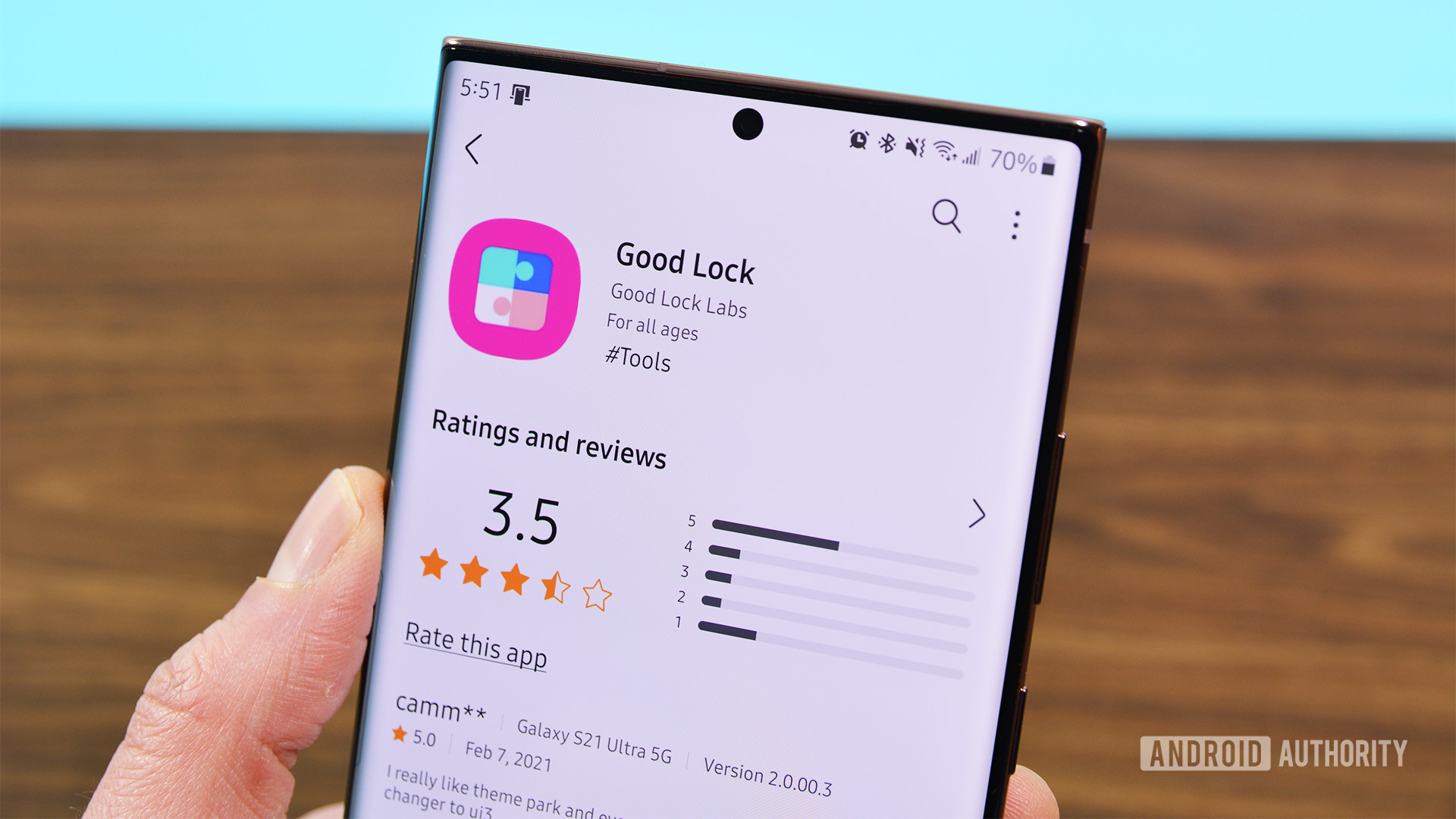
Samsung Good Lock Galaxy Store listing

  • Starting September 25, users must create a Samsung account to access the Galaxy Store, which was previously available without one.
  • Users will need a Samsung account to update apps downloaded from the Galaxy Store, but pre-installed apps like the Gallery app should still receive automatic updates alongside new firmware versions.
  • A Samsung account provides access to additional services, including Samsung Pay and Samsung Cloud, and can be created via the phone’s settings.

Attention, Samsung phone users. There’s a change coming into effect today that could cause you a bit of inconvenience. Starting today, September 25, using the Galaxy Store would require you to create a Samsung account. Of course, most of the apps you probably have on your phone are from the Google Play Store. However, if you’re someone who installs apps that are only available via the Galaxy Store, such as Samsung Good Lock, and you don’t have a Samsung account, you’ll now be required to create one.

Google Photos rolls out new AI video editing tools, as previously spotted by Android Authority

Google Photos logo on smartphone Stock photo

Credit: Edgar Cervantes / Android Authority
  • The Google Photos app on Android and iOS is getting new video editing tools.
  • Google is also tweaking the app’s UI to make video editing tools more visible and easier to access.
  • The new AI-powered presets are designed to help users automatically trim videos, adjust lighting, control playback speed, and more.

Google is rolling out new video editing tools in the Google Photos app, including AI-powered features designed to make video editing simpler and more effective.

-- Get the right stuff from a partner you trust. --

Partners

-- IT NEWS --

Blog

admin December 11th, 2025

Credit: Edgar Cervantes / Android Authority TL;DR Spotify is getting a new “Prompted Playlist” feature to help users create more […]

admin December 11th, 2025

TL;DR Four of the best Good Lock modules aren’t working properly on the One UI 8.5 beta. Home Up and […]

admin December 10th, 2025

This is an open thread. We want to hear from you! Share your thoughts in the comments and vote in […]