OnePlus Buds Pro 3 leak claims launch is right around the corner

OnePlus Buds 3 Pro gold 3

Credit: Smartprix
  • A new leak claims that the OnePlus Buds Pro 3 will launch next week.
  • The leak doesn’t say what day the release will happen.

Since the start of August, details about the OnePlus Buds Pro 3 have not stopped leaking. Last week, there was a substantial leak revealing a few of the key specs, which was followed by information on the price later in the same week. All of this has been leading up the the eventual launch of the wireless earbuds, which we now know could be happening soon thanks to the latest leak.

Tipster Yogesh Brar took to X (formerly Twitter) to reveal some information about the OnePlus Buds Pro 3. While we were already aware of the specs shared in the post due to the big leak last week, there was one piece of information we had not heard until now.

The successor to one of the best fitness trackers could launch globally soon

Xiaomi Smart Band 9 global blue (1)

Credit: Arsene Lupin
  • A new leak claims that the Xiaomi Smart Band 9 could soon be ready for a global launch.
  • It appears the global version won’t be any different than the model that launched in China.
  • The fitness tracker will come in a variety of finishes and with different band types.

Xiaomi launched the Smart Band 9 last month in China, but we may not have to wait all that long for the global edition. A new leak suggests we could see an international launch for the fitness tracker in the near future.

This latest leak comes courtesy of Arsene Lupin on X (formerly Twitter) who states that the smart tracker is “going global soon.” Unfortunately, the tipster does not offer a date or even a window for when we could expect to see it.

Humble Bundle Capcom sale: Donate $30 and get 12 amazing games

Humbe Bundle Capcom Summer Sale

I still can’t get over how hot this summer is, so I am all about staying indoors, in the comfort of my AC. If you’re feeling the same way, you likely need some ways to entertain yourself, and Humble Bundle has a way to keep you entertained for many hours on the cheap. The Capcom Summer sale offers up to 12 of Capcom’s best titles. You’ll get access to all of them if you donate $30 or more. This is an amazing deal, considering getting all of these titles separately would cost you up to $349. Let’s dig into how this works.

Take advantage of the Humble Bundle Capcom Summer sale!

Samsung’s Energy Score vs Garmin’s Body Battery: Which is better?

Samsung Galaxy Watch Ultra Garmin Fenix 7 Pro

Credit: Kaitlyn Cimino / Android Authority

Smartwatches and fitness trackers are adding more capabilities to users’ wrists than ever, including powerful features related to health and fitness. Most recently, companies have been moving towards holistic wellness tracking, introducing tools that offer broader analysis and actionable insights. Though Garmin has been on that train for some time with its well-known Body Battery feature, Samsung recently joined the party by introducing Energy Score. Find out how these two metrics compare and which is more effective.

Garmin’s Body Battery

A Garmin user review's their Body Battery on a Fenix 7 Pro.

One UI 6.1.1 makes streaming apps to your Windows PC less annoying

  • One UI 6.1.1 removes the need to tap “start now” every time you want to stream an app from your Galaxy device to your Windows PC via Phone Link.
  • This became a problem due to a restriction in Android 14 that affected the method that Link to Windows used to stream apps.
  • In the latest version of One UI, the Link to Windows Service has changed how it streams apps to your PC to avoid Android 14’s restrictions.

If you have an Android phone and a Windows PC, then one of the best things you can do to make them work better together is to install Link to Windows on your phone. By installing Link to Windows on your Android phone, you can access a number of its functions through the Windows Phone Link app on your PC, including seeing and sending text messages, making phone calls, controlling music playback, and more. Some features in Phone Link, such as app streaming, are only available if Link to Windows is preinstalled on your Android phone, though. Link to Windows is preinstalled on Galaxy phones running Samsung’s One UI software, for example, but after the One UI 6.0 update, streaming apps from Galaxy phones to Windows PCs became kind of annoying. Fortunately, this is no longer the case thanks to a change in One UI 6.1.1.

After the Android 14 update rolled out to users with Android phones that supported app streaming via Link to Windows, people quickly discovered that the update made streaming apps much more annoying.

OLED displays might be coming to the iPad Air and Mini as early as 2026

  • The M4 iPad Pro is the first iPad to feature an OLED display, while the iPad Air and Mini still use LCD Liquid Retina displays.
  • This might, however, change by 2026, with both the iPad Air and Mini getting OLED displays.
  • That said, these base iPad models will likely miss out on a few advanced features, given the lower price points.

The M4 iPad Pro is the first device in the iPad lineup to feature an OLED display. In comparison, the iPad Air and Mini have always been equipped with LCD Liquid Retina displays, which lack the kind of enhanced contrast and deeper blacks that OLED displays provide. This is not surprising, given that the iPad Pro is one of Apple’s top-tier devices, so it’s equipped with the best-in-class tech. But per recent rumors, things might soon change.

According to The Elec, both the iPad Air and Mini might get OLED displays as early as 2026. This is welcome news, given that previous reports suggested a timeline closer to 2028 for this upgrade. The reporting outlet even goes on to specify that Apple could use Samsung as its supplier for OLED panels. We’re unsure whether the two devices will have tandem OLED, but given their lower price points, we’re unlikely to see this advanced form of OLED tech in the base models.

You can now try out the new Weather app ahead of the Pixel 9’s release

Pixel Weather app 2

Credit: Robert Triggs / Android Authority
  • The new Weather app from the upcoming Pixel 9 series has leaked, making it available for unofficial sideloading.
  • You can install the app (at your own risk) on any Android 14 device.
  • Leaks suggest that the app could soon receive features like notifications for weather forecast and precipitation, Weather maps, and AI Weather Summaries.

We’re very excited about the Google Pixel 9‘s release next week and can’t wait to get our hands on all the new stuff Google has in store. The Pixels have always been a rather leaky affair, and we know practically everything about the upcoming devices. If you want to get the party started early, the new Weather app that is expected to debut on the Pixel 9 series is now available for unofficially sideloading onto your Android device, allowing you to try it out before Google officially announces it.

The upcoming Weather app is now available on APKMirror (h/t Kamila Wojciechowska). You can install the APK on your Android 14 device to get it running. Since this is not the final version of the weather app, you could face some crash issues, for which you’d need to clear your phone’s cache.

Chat support disappears from redesigned T-Mobile app (Update: Statement)

  • A recent update to the T-Mobile app has removed chat support via the app for most users, though some iOS users still see the option.
  • Users can still contact T-Mobile support through T-Force on social media or via phone.
  • We’re unsure if the chat feature will return to the T-Mobile app or if it has been phased out, though T-Mobile through its statement mentions that it will be returning soon.

Update, August 7, 2024 (11:02 PM ET): T-Mobile has provided us a statement on the matter:

We’re updating chat support which may have caused some customers to temporarily lose access to the feature. It will be back up and running again shortly.

Can a Bitcoin Ban Help Stop Ransomware Attacks

As ransomware attacks continue to escalate, with cybercriminals demanding hefty ransoms paid in cryptocurrencies like Bitcoin, there is growing debate over whether banning Bitcoin could be an effective strategy to curb these attacks. While a ban on Bitcoin might seem like a straightforward solution, the issue is far more complex and nuanced. Here’s a closer look at the potential impacts of such a ban on ransomware activities.

The Role of Bitcoin in Ransomware Attacks

Bitcoin and other cryptocurrencies have become the preferred method for cybercriminals to receive ransoms due to their pseudonymous nature and ease of use. The decentralized and borderless characteristics of cryptocurrencies make them ideal for illicit transactions, as they provide a degree of anonymity and can be difficult to trace.

Ransomware operators typically demand payment in Bitcoin because it allows them to quickly receive funds without the scrutiny that traditional banking methods might attract. The anonymity provided by Bitcoin’s blockchain, despite being partially transparent, is a key factor in its appeal to criminals.

Potential Benefits of a Bitcoin Ban

1. Reduced Anonymity: If Bitcoin were banned, it could force ransomware operators to seek alternative methods for receiving payments, potentially making their activities more detectable. Traditional banking systems and other payment methods are subject to regulatory scrutiny and could make it more difficult for criminals to operate without being identified.

2. Increased Difficulty for Criminals: A Bitcoin ban might complicate the operational logistics for ransomware groups, who would have to find and use alternative, potentially less efficient, methods for accepting payments. This could lead to disruptions in their operations and, in some cases, reduce the frequency of attacks.

3. Enhanced Regulatory Oversight: A ban would likely spur greater efforts to enforce and monitor financial transactions. Authorities could focus on other cryptocurrencies that are still operational, or new forms of digital currency, making it harder for criminals to remain anonymous.

Limitations and Challenges of a Bitcoin Ban

1.  Cryptocurrency Alternatives: Even if Bitcoin were banned, ransomware operators could turn to other cryptocurrencies that offer similar levels of anonymity, such as Monero or Zcash. These alternatives are specifically designed to enhance privacy and could be used to circumvent a Bitcoin ban.

2.Technical and Enforcement Difficulties: Enforcing a Bitcoin ban would be challenging given the decentralized nature of cryptocurrencies. Bitcoin operates on a global network, making it difficult for any single country or jurisdiction to impose and enforce such a ban effectively. Cybercriminals could exploit loopholes or use decentralized exchanges to bypass restrictions.

3. Impact on Legitimate Users: Bitcoin and other cryptocurrencies have legitimate uses and provide benefits to many individuals and businesses. A ban could disrupt these positive applications, potentially impacting innovation and financial inclusion for the broader population.

4. Shift in Criminal Behavior: Banning Bitcoin might lead to changes in criminal tactics rather than a complete cessation of ransomware attacks. Criminals could adopt more sophisticated techniques, increase their use of privacy-focused technologies, or target different sectors altogether.

Conclusion

While a ban on Bitcoin might have some impact on ransomware activities by reducing anonymity and complicating the process for cybercriminals, it is unlikely to be a panacea. The effectiveness of such a ban would be limited by the existence of alternative cryptocurrencies, the challenges of enforcement, and the potential for criminals to adapt their strategies.

A more comprehensive approach to combating ransomware might involve enhancing cybersecurity measures, improving incident response protocols, increasing international cooperation, and addressing the root causes of cybercrime. In the end, while banning Bitcoin could be a step in the right direction, it should be part of a broader, multi-faceted strategy to tackle the evolving threat of ransomware.

The post Can a Bitcoin Ban Help Stop Ransomware Attacks appeared first on Cybersecurity Insiders.


Britain NHS Software provider to face Ransomware penalty of £ 6 million

NHS England has been making headlines since 2017 due to ongoing cyber attacks and ransomware incidents. Recently, the non-profit organization is in the news again, this time because of a £6 million fine related to a 2022 ransomware attack that severely disrupted its digital and social services.

The penalty, imposed by the Information Commissioner’s Office (ICO), was directed at Advanced Computer Software Group, the technology service provider for NHS England. The fine was issued because Advanced Computer Software Group failed to safeguard user data during the attack, which resulted in significant data breaches.

Although Advanced Computer Software Group initially sought to shift the blame to NHS England by requesting that the penalty be shared, the ICO denied this request. The ICO clarified that NHS England had outsourced its tech services to the company and was not responsible for the data protection failures.

The attack led to hackers gaining access to NHS’s database, causing the theft of millions of medical records and impacting patient care. The penalty was imposed on Advanced Computer Software Group because it had not implemented crucial multi-factor authentication on its servers.

John Edwards, the Information Commissioner, stated that this incident should serve as a wake-up call for businesses in the UK, highlighting the critical need for investment in cybersecurity.

Earlier this year, NHS England faced another cyber threat from RansomHub, a rebranded ransomware group previously known as Knight. This attack involved file-encrypting malware rented from another criminal organization, Cyclops, which operates on a Ransomware-as-a-Service model. The target in this case was Synnovis, a technology provider that had been working with NHS for 18 months.

Security experts anticipate that Synnovis could face a significant fine as well if it is found to have neglected essential security measures needed to protect NHS’s medical data.

The post Britain NHS Software provider to face Ransomware penalty of £ 6 million appeared first on Cybersecurity Insiders.
Lenovo leak hints at a Legion Go ‘Lite’ handheld gaming console with a 7-inch display

Lenovo Legion Go Hero

Credit: C. Scott Brown / Android Authority
  • A leak on the Lenovo website hints at one or two new Legion Go models.
  • The now-removed info suggests that a Legion Go “Lite” may have a 7-inch display, dual fans, and an HDMI port.
  • Rumors of a Legion Go Lite had originally been reported back in May.

Evidence is mounting that at least one new Lenovo Legion Go model could be on the way. Rumors of a Legion Go “Lite” were further galvanized yesterday by a slip-up on the official Lenovo site that alluded to an upcoming new version of the handheld gaming console.

As originally spotted by an eagle-eyed user on the Legion Go subreddit and subsequently looked into by VideoCardz, the FAQ section of the Legion Go product page had some interesting answers about the device that clearly don’t relate to the current model.

Chrome just made your browsing history easier to understand

Google Chrome logo stock photo 2

Credit: Edgar Cervantes / Android Authority
  • The latest update to Google Chrome history now shows if a site was visited via a third-party app.
  • The small change gives users a bit of extra insight into their browsing history and habits.

It’s easy to check your Google Chrome history and scratch your head trying to remember why certain sites are on there. That can be because you were directed to the site via an app rather than while browsing on Chrome. To address this, Google just tweaked Chrome history to add an indication if a site was visited via a third-party app.

Artem Russakovskii highlighted the subtle update in a post on X. The post states, “Google Chrome history now tells you if a site was visited via a third-party app, like Google App or Google News. Neat.” It goes on to credit Hamzah Malik for spotting the change.

Google loses big in antitrust case, judge calls company a ‘monopolist’ (Update: Statement)

Google Logo at Google NYC Headquarters with Plants Surroudning it

Credit: C. Scott Brown / Android Authority
  • Google has suffered a major defeat in a case filed by the US Department of Justice.
  • The judge ruled Google guilty of engaging in monopolistic behavior when it paid companies to have its search engine set as the default on devices and web browsers.
  • There’s no decision yet on what this will mean for Google’s search business.

Update, Aug 5, 2024 (11:40 PM ET): Google’s President of Global Affairs, Mr. Kent Walker, has released the following statement on this DOJ decision:

This decision recognizes that Google offers the best search engine, but concludes that we shouldn’t be allowed to make it easily available.

OpenAI has developed a 99.9% accuracy tool to detect ChatGPT content, but you are safe for now

  • OpenAI has developed a method to detect when someone uses ChatGPT to write essays or assignments.
  • The method utilizes a watermarking system that is 99.9% effective at identifying AI-generated text.
  • However, the tool has not yet been rolled out due to internal concerns and mixed reactions within the company.

When OpenAI launched ChatGPT towards the end of 2022, educators expressed concerns that students would use the platform to cheat on assignments and tests. To prevent this, numerous companies have rolled out AI detection tools, but they haven’t been the best at producing reliable results.

OpenAI has now revealed that it has developed a method to detect when someone uses ChatGPT to write (via The Washington Post). The technology is said to be 99.9% effective and essentially uses a system capable of predicting what word or phrase (called “token”) would come next in a sentence. The AI-detection tool slightly alters the tokens, which then leaves a watermark. This watermark is undetectable to the human eye but can be spotted by the tool in question.

Android 15 is supposed to force apps to go edge-to-edge, but Google quietly added a way to opt out

  • Starting in Android 15, apps that target the new release are forced to go edge-to-edge by default, which makes the status and navigation bars transparent.
  • However, Google quietly added an API that apps can use to opt out of edge-to-edge enforcement.
  • This API isn’t mentioned in any of Google’s developer documents, blog posts, or codelabs, though.

Although Android has long offered apps the ability to use your phone’s entire screen by letting them draw content underneath the status and navigation bars, many apps don’t take advantage of this. There are many reasons why developers have shied away from making their apps go edge-to-edge, but in the upcoming Android 15 update, they’ll have no choice but to do so — or at least, that’s what we thought.

For a bit of context, apps have long been able to go edge-to-edge by implementing a few APIs that tells the OS to draw the app underneath the two “system bars” (ie. the status and navigation bars). The reason that Google didn’t immediately enforce this behavior is that many apps might have UI issues if they were forced to go edge-to-edge. For example, an app might have an interactive element like a floating action button that would overlap with the navigation bar if it went edge-to-edge.

-- Get the right stuff from a partner you trust. --

Partners

-- IT NEWS --

Blog

admin December 16th, 2025

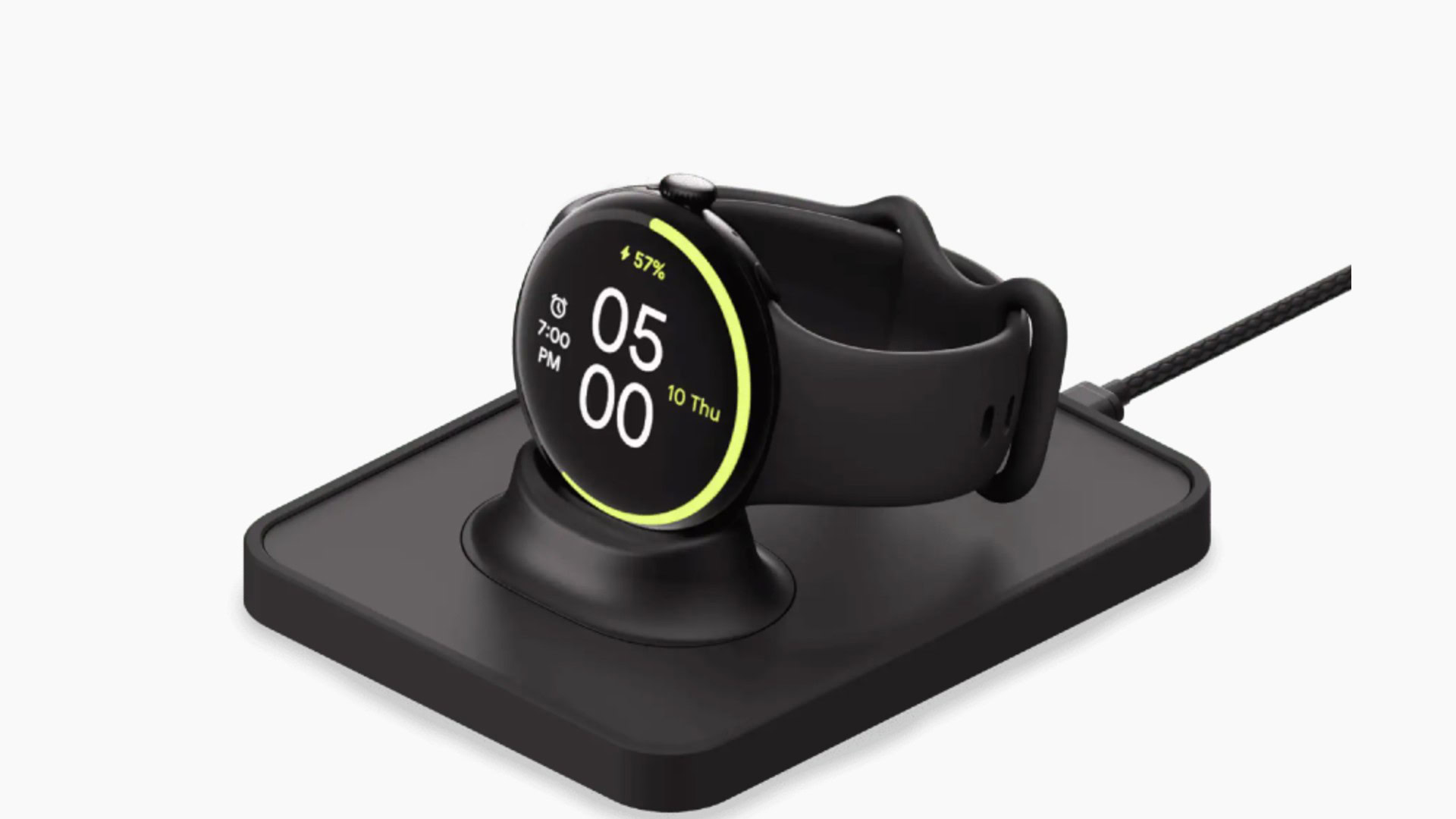
Credit: Google TL;DR Google is now selling the Mous Pixel Watch Charger, the first Google-certified third-party charger for the Pixel […]

admin December 16th, 2025

We’ve seen some unexpected battery behavior in the Pixel 10 series. Battery life is typically okay for us on Google’s […]

admin December 11th, 2025

Credit: Edgar Cervantes / Android Authority TL;DR Spotify is getting a new “Prompted Playlist” feature to help users create more […]