Adaptive Touch quietly launches on the Google Pixel 9, works really well

  • The Google Pixel 9 has a new Adaptive Touch feature that’s enabled by default.
  • Adaptive Touch automatically adjusts your Pixel 9’s touch sensitivity based on various factors.
  • For example, it boosts the sensitivity when your fingers are wet or when you apply a screen protector.

The Google Pixel 9 series just debuted less than two weeks ago, and we’re still finding new aspects about the phones that Google didn’t tell us about. That isn’t too surprising, considering the Made by Google keynote lasted about an hour and twenty minutes, with twenty of those minutes being spent on Google’s AI services rather than the new hardware. Even so, we thought we already knew everything there was to know about the Pixel 9’s display, but as it turns out, it still had one more trick up its sleeves: Adaptive Touch.

Tucked under Settings > Display > Touch sensitivity is a new Adaptive Touch feature. When Adaptive Touch is enabled, “touch sensitivity will automatically adjust to your environment, activities and screen protector.”

This amazing battery can power your home, EV, or RV, and it’s $1,300 off right now

Anker SOLIX F3800 featured image

Regular power banks and battery packs are nice, but if you want something that can truly handle it all, the Anker SOLIX F3800 Power Station is the company’s best battery that is still considered portable. This thing is so powerful it can power whole homes, RVs, or charge your electric vehicle. It’s not cheap at $3,999, but right now, there’s a very nice deal that saves you a whole $1,300, bringing the price down to a more manageable $2,699.

Get the Anker SOLIX F3800 Power Station for $2,699

The Eufy Security Indoor Cam S350 is the coolest, and it’s $30 off

Eufy Security Indoor Cam S350

Credit: Eufy

Are you looking for a security camera for your home? You won’t find anything funner than this one; it looks like a little robot! It’s also tiny and pretty capable. As if that wasn’t interesting enough, it is also available for a nice $30 discount right now, bringing the Eufy Security Indoor Cam S350 cost down to just $100.

Get the Eufy Security Indoor Cam S350 for $100

Do Not Disturb mode is being supercharged in Android 15: Here’s how

  • Google is preparing to supercharge Android’s Do Not Disturb mode settings in Android 15.
  • Hidden within the latest Android 15 QPR1 beta is a new Priority Mode menu that lets you create fully customizable Do Not Disturb schedules.
  • Priority Mode used to exist in some older versions of Android, but it was removed several years ago.

One of the best parts of owning a smartphone is how it keeps us connected to what’s going on with our friends, family members, and other people we share interests with. One of the worst parts of owning a smartphone is how that constant connection can distract us from our work or studies, which is why it’s crucial that you learn how to use Do Not Disturb mode to eliminate distractions. Do Not Disturb mode can be customized in a variety of ways through the Settings app, and in Android 15, those customization options could be greatly expanded.

Google released Android 15 QPR1 Beta 1 earlier today, and while digging through it to find what’s new, I discovered many changes to Do Not Disturb mode settings. Google is not only preparing to rename the Do Not Disturb mode entry point but also working on tweaking the Do Not Disturb settings UI, adding a new Quick Settings tile, and introducing many new customization options. With a bit of tinkering, I managed to fully activate the new experience, so here’s a first look.

Study shows your smartwatch and fitness trackers are lying to you

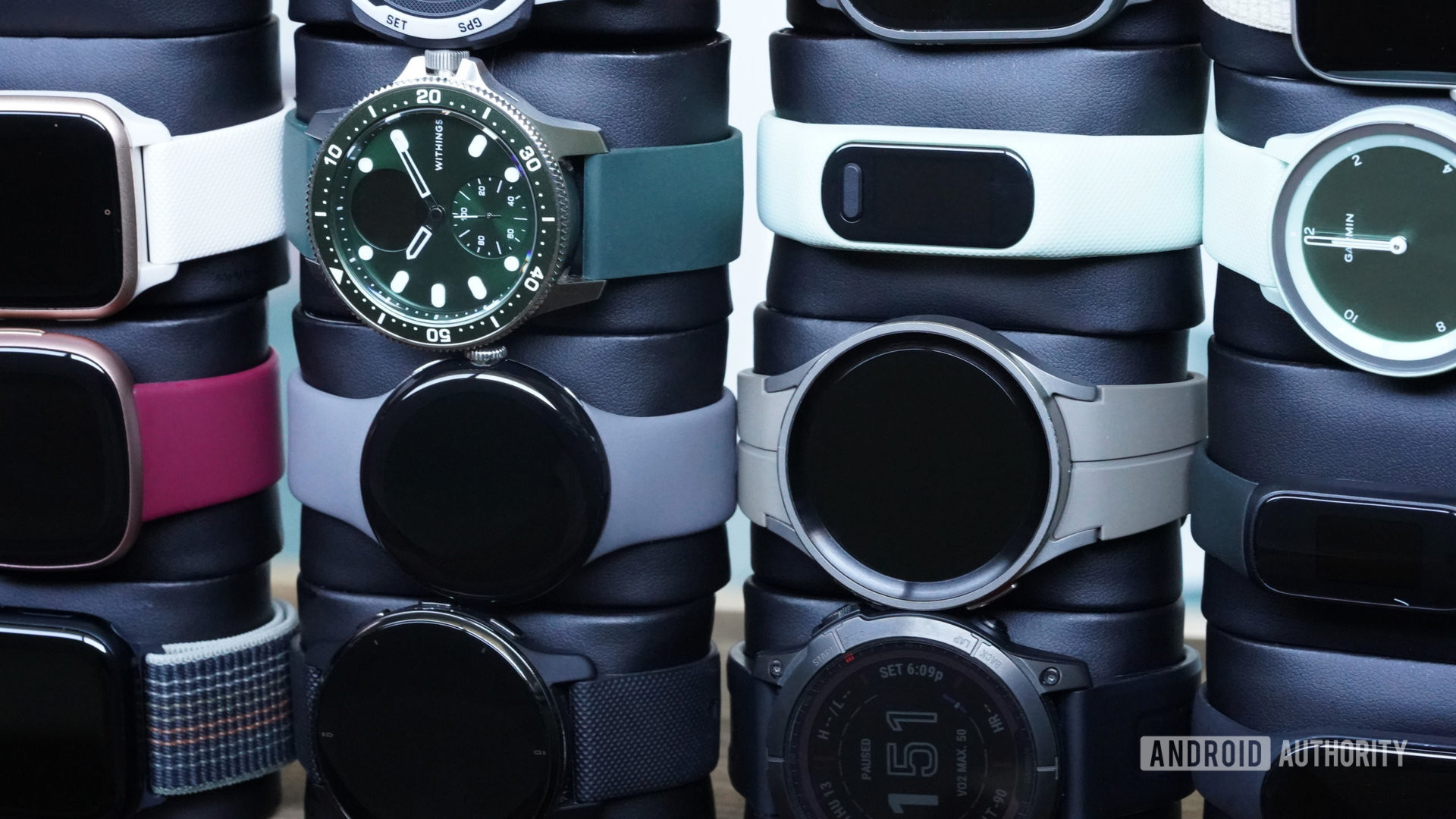
The top wearables from Apple, Samsung, Garmin, and more are stacked in rows.

Credit: Kaitlyn Cimino / Android Authority
  • A recent study reminds wearables users that health and fitness tracking is not yet an exact science.
  • Though many stats like heart rate and VO2 max can be measured within a reasonable margin of error, others, like sleep tracking, are less accurate.
  • The review reminds us of the limits of wearable tech and the importance of investing in quality products to reduce margins of error.

Smartwatches and fitness trackers adorn more wrists than ever before, and the majority of users are as interested in their health and fitness stats as their smart tools. Here at Android Authority, we consistently give equal weight to a device’s capabilities and accuracy when reviewing a new watch or band. However, it’s important to remember that wearables are intended to guide users, not provide pinpoint accuracy or medical-level feedback. A recently published umbrella review underscores the limitations of health and fitness tracking stats and reminds users to consider their stats with a grain of salt.

Starting with the positives, the review found that most wearable devices can measure your heart rate within 3% accuracy and can record equally reliable heart rate variability as well as potential signs of arrhythmia. Wearables can also provide solid estimates related to cardiorespiratory fitness, typically referred to as VO2 max on your device. These metrics are central to a broad range of health and fitness monitoring, and heart rate sensor accuracy is often a focus of new launches.

Deal: The best ANC headphones return to Amazon Prime Day prices

Bose QuietComfort Ultra headphones

I live in LA, where noise pollution is no joke. When I asked my co-workers at Sound Guys which headphones had the best ANC for potentially blocking out a helicopter hovering over my room, they all agreed that if any headphones could do this, it would be the Bose QuietComfort Ultra. That said, these are expensive, so it’s nice to catch a good deal when possible. Right now, the Bose QuietComfort Ultra headphones are just $349, saving you $80 bucks. This is the same pricing we saw during Amazon Prime Day.

Get the Bose QuietComfort Ultra headphones for just $349

Experts Weigh In on the NPD Breach and Its Implications

The NPD breach, one of the most significant cybersecurity incidents in history, exposed the personal data of nearly three billion people, including Social Security numbers, addresses and email addresses. A cybercriminal group carried out the breach called “USDoD,” which claimed responsibility for the attack. The breach occurred in December 2023 but was only confirmed by the National Public Data (NPD), a data broker that collects information from public sources for background checks, in August 2024. The NPD also admitted that it had accidentally published its own passwords online, making the breach worse.

The breach has sparked outrage and concern among the public, lawmakers and experts, who have criticized the NPD for its lack of transparency, accountability and security. The NPD is facing a lawsuit from a consumer advocacy group, which accuses the company of violating the privacy rights of millions of Americans. The breach has also raised questions about the adequacy of the U.S. laws and regulations that govern personal data collection, use and protection, especially by data brokers that operate with minimal oversight and disclosure. The breach has also exposed the vulnerability of the consumers, who may not be aware of how their data is collected, stored and shared, and who may face the risk of identity theft, fraud and scams.

Several cybersecurity experts from different companies have shared their insights and opinions on the NPD breach and its implications. Clyde Williamson from Protegrity emphasized the need for organizations to protect the data they exchange with consumers and comply with privacy laws. He also pointed out the inadequacy of U.S. laws in handling citizens’ personal data and the need for regulatory standards for data brokers. Kiran Chinnagangannagari from Securin expressed alarm over the silence of the NPD until the breach included leaked social security numbers. He also stressed the need for organizations to evaluate and ensure the cybersecurity practices of their partners and third-party vendors. Ayan Hadler from Traceable AI suggested using intent-driven risk management, which looks at how users behave after getting onto the platform and what they are going after, to reduce the risks posed by weak KYC measures.

Clyde Williamson, Product Management, Innovations, Protegrity

“Organizations rely on the exchange of data for their vitality. Consumers share their personal identifiable information (PII), like Social Security numbers and emails, with the expectation that businesses will protect this data and comply with privacy laws to prevent unauthorized access. In this case, National Public Data (NPD) scraped individuals’ PII from public sources for use in background checks, leaving people unaware if their data was accessed and emphasizing growing concerns regarding customer trust in businesses and their ability to secure their data. 

Notably, this breach wasn’t announced for a week; it only came to light and led to a lawsuit earlier because the company didn’t disclose it. Further, it’s still unclear whether they intentionally avoided sharing details of this breach or just discovered it themselves. This highlights the inadequacy of U.S. laws in handling citizens’ personal data, which are not equipped for the challenges of the 21st century. Data brokers like the NPD also aren’t held to the same regulatory standards as institutions like the Payment Card Industry (PCI), where they’re obligated to conduct annual audits and controls around credit card data. As things stand now, the US has no such obligations.

Most likely, a lot of the stolen data set is from one of our most vulnerable demographics: senior citizens and their families. A popular scam has a threat actor pretending to be a lawyer with bad news for the senior – their family member is in trouble and needs money. And why wouldn’t a grandparent believe them if they had valid PII to validate their credibility? These scammers don’t have to open credit in someone’s name to ruin lives. They just need to know how to use the information stolen to empty a caring family member’s bank account.

As breaches and attack surfaces continue to grow, relying on class action lawsuits for negligence cannot be the best option. Organizations must prioritize transparency and enhance their efforts to de-identify sensitive data to protect consumer information. They must move beyond traditional defense mechanisms and adopt regulator-recommended data protection strategies like encryption and tokenization. These methods render data useless to attackers, making it impossible to steal and use maliciously. By implementing these protections, businesses can diminish the value of stolen data and mitigate the long-term effects of ransomware attacks or fraudulent activities.”

Kiran Chinnagangannagari,  Chief Product & Technology Officer, Securin

“In the wake of the staggering National Public Data breach, which compromised millions of records on U.S. citizens, the silence from the company until the breach included leaked social security numbers is nothing short of alarming. This breach underscores the profound risks posed by mass data aggregation and sheds a harsh light on the glaring gaps in corporate responsibility when managing and communicating such incidents. The fact that such enormous volumes of personal data are accessible to companies and private investigators, and now the deep and dark web, raises severe doubts about how well-protected our information truly is. This breach lays bare the minimal oversight over who gains access to this data—and what happens afterward.

This breach should also serve as a wake-up call, emphasizing the critical need for organizations to rigorous or stricter regulations and better enforcement. Companies must be held accountable, not just for evaluating the cybersecurity practices of their partners and third-party vendors. It’s no longer enough to trust that data handlers have robust defenses—organizations must proactively ensure that every entity in their supply chain is equipped to prevent such catastrophic breaches. It’s time for their cybersecurity practices but for those of every entity they do business with. The stakes are too high to allow this negligence to continue.”

Ayan Hadler, Sr. Product Manager, Traceable AI

“When fraudsters have access to key personal details needed to bypass KYC on nearly all American consumers, the question is who to trust anymore? This is where intent-driven risk management shines. Intent-driven risk management looks at how users are behaving “after” getting onto the platform and what are they going after, negating a lot of the risks injected through brittle KYC measures.”


The post Experts Weigh In on the NPD Breach and Its Implications appeared first on Cybersecurity Insiders.

Germany offers Cybersecurity Labels for mobile devices

Since August 14, 2024, the Federal Office for Information Security (BSI) in Germany has begun issuing security labels for IT devices. These labels provide a snapshot of the security level that users can expect from their devices.

In today’s digital age, smartphones and tablets used in corporate settings handle and store vast amounts of sensitive information, making them prime targets for hackers. To protect personal information such as photos, videos, documents, messages, and contacts, users require a certain level of security.

The BSI has introduced guidelines for manufacturers to qualify for these IT security labels. To earn a label, manufacturers must ensure their products, components, and services adhere to specific security standards.

Key requirements include:

a.) Identifying and addressing vulnerabilities promptly.
b.) Maintaining transparency about data collection, analysis, and storage practices.
c.)  Informing users about the use of components like microphones, cameras, and location sensors.
d.)  Clearly outlining permissions required by pre-installed mobile apps for accessing information such as camera, contacts, microphone, location, messages, and gallery.

Privacy advocates emphasize that these guidelines should not only be established in theory but should be rigorously applied by manufacturers.

The need for such IT security labels extends beyond Germany, as digitalization becomes increasingly pervasive worldwide. These labels provide valuable insights into the cybersecurity measures of devices, helping both consumers and businesses make informed decisions and fostering trust in the products they use. Thus, these labels not only enhance business reputations but also ensure that consumers can use products with greater confidence.

The post Germany offers Cybersecurity Labels for mobile devices appeared first on Cybersecurity Insiders.
Love it or hate it, this is how Google made the new Pixel 9 packaging plastic-free

  • Google’s latest Pixel packaging is its first to be 100% plastic-free.
  • The new look wraps a no-nonsense cardboard box in a colorful external sleeve.
  • Google mixed up some extra-strong paper to help the packaging feel as robust as it is environmentally friendly.

Google introduced the Pixel 9 series just last week, and if you’re anything like us, you rushed to get your pre-order in. The first of those orders are just about to start arriving, giving Pixel’s biggest fans their first hands-on look at this new hardware. And while there’s clearly a lot to like about the phones, we’re curious just how far that same enthusiasm will extend to Google’s latest packaging.

For years now, Google’s placed an emphasis on trying to be environmentally friendly when it comes to hardware. That’s involved a lot of recycled plastics, not just in devices themselves, but also for their accessories, like cases. That trend has continued when it comes to packaging, and if you’ve opened any Google products anytime recently, you know to expect a whole lot of cardboard, with minimal plastic.

Take a look at Circle to Search’s ‘Song Search’ in action (Update: Rolling out)

  • Circle to Search could soon gain audio support. The new functionality would allow you to search for music using CTS.
  • You’ll be able to use the feature from anywhere.
  • Update: The feature is now rolling out to Circle to Search users.

Update, August 20, 2024 (12:22 AM ET): Users are reporting that the Song Search/Audio Search feature in Circle to Search is now rolling out.

The feature has been spotted on Samsung Galaxy flagships, but it should soon become available on all phones that support Circle to Search.

Google could soon help you discover new and upcoming movies and TV shows (APK teardown)

Samsung Galaxy Z Fold 5 google discover

Credit: Ryan Haines / Android Authority
  • The Google Discover feed could soon get a new card that will show details about new movies and TV shows.
  • The option to enable the card will appear alongside the Air quality, Weather, Finances, and Sports options in the Customize menu.
  • The TV and Movies card is currently in development and could arrive with a future update.

Google lets you customize the Discover feed on your device to show news and updates based on your interests. In addition, it lets you add four cards at the top of the feed that show you the current air quality and weather in your location, along with stock prices from a customized company watchlist and score updates from your favorite sports teams. Soon, Google could add another card to the mix that will provide updates on new and upcoming movies and TV shows.

We spotted the upcoming card in a teardown of the latest beta update for the Google app (version 15.32.37.28) and managed to enable it ahead of the official rollout. As you can see in the attached screenshots, the Customize menu for the Discover feed will show a new TV and Movies option when the card rolls out.

Garmin backing gives boost to Google’s new Satellite SOS feature

Google Pixel 9 Peony color in hand

Credit: C. Scott Brown / Android Authority
  • Garmin has announced its support for Google’s upcoming Satellite SOS feature.
  • Pixel 9 phones will be able to access Garmin’s emergency response coordination services when cellular coverage is not available.
  • It will arrive with Android 15 and initially only be available to Pixel 9 users in the US.

When unveiling the new Pixel 9 series last week, Google revealed that the devices will be the first Android phones to offer its Satellite SOS support. Garmin wasted no time in adopting the upgrade, announcing how its support for the feature will allow more users to raise the alarm in an emergency.

Once available, users who are outside of cellular and Wi-Fi connectivity will be able to use Google’s satellite option to connect with Garmin Response. This round-the-clock service is staffed by professionally trained emergency incident coordinators. It can liaise with a global network of law enforcement agencies to react when an alert to an emergency situation is raised.

iPhone 16 Pro Max leak shows off new gold-like bronze color (Update: Desert Titanium)

iPhone 16 Pro Max dummy unit leak Bronze Gold color

  • A new dummy unit leak has shown off a gold-like bronze color for the iPhone 16 Pro.
  • Apple has been rumored to replace the Blue Titanium color with a gold-like color, so this dummy unit leak aligns with the rumors.

Update, August 19, 2024 (12:10 AM ET): According to a new leak from Majin Bu on X (the platform formerly known as Twitter), this gold/bronze-like color is likely to be called Desert Titanium. The color is said to be dark gold, similar to the older purple color on the iPhone 14 Pro, offering a deep and relatively discreet color to the iPhone 16 Pro lineup.

iPhone 16 Pro colors leak

-- Get the right stuff from a partner you trust. --

Partners

-- IT NEWS --

Blog

admin December 11th, 2025

Credit: Edgar Cervantes / Android Authority TL;DR Spotify is getting a new “Prompted Playlist” feature to help users create more […]

admin December 11th, 2025

TL;DR Four of the best Good Lock modules aren’t working properly on the One UI 8.5 beta. Home Up and […]

admin December 10th, 2025

This is an open thread. We want to hear from you! Share your thoughts in the comments and vote in […]