How does Google Fi international roaming work, and is it worth it?

Google Fi Wireless logo on smartphone with notebook SIM card and SIM ejector Stock photo 2

Credit: Edgar Cervantes / Android Authority

International roaming used to be something only offered by the big three postpaid carriers. Thankfully more prepaid carriers have embraced international calling in recent years. Chief among these options is Google Fi Wireless. In this guide, we explain how Google Fi international roaming works. We’ll also discuss the costs, if it’s worth it, and if there are any worthwhile alternatives.

Google Fi International rates

Google Fi is known for its exceptional international access. The exact benefits will vary depending on what plan you get. Fi Wireless Unlimited Plus has the best international perks out of all the plans. It includes unlimited talking, text, and data in the US, Mexico, Canada, and over 200 other countries.

The best Samsung Galaxy deals of July 2023

Samsung Galaxy S23 Ultra vs Galaxy S23 size difference

Credit: Dhruv Bhutani / Android Authority

With the Galaxy S23 series hitting the shelves, prices on the S22 range are dropping to clear out the old stock. There are also plenty of savings available on the latest foldables, as well as many of the past Galaxy S and Note lines. If you don’t mind going with a slightly older flagship, you can save even more. We’ve rounded up the best Samsung Galaxy deals, from the Galaxy S23 to the Note 10.

Featured deals: Save $50 on the next Galaxy Foldable

Samsung The Next Galaxy Reserve Campaign 2023

Modular visual question answering via code generation

Visual question answering (VQA) is a machine learning task that requires a model to answer a question about an image or a set of images. Conventional VQA approaches need a large amount of labeled training data consisting of thousands of human-annotated question-answer pairs associated with images. In recent years, advances in large-scale pre-training have led to the development of VQA methods that perform well with fewer than fifty training examples (few-shot) and without any human-annotated VQA training data (zero-shot). However, there is still a significant performance gap between these methods and state-of-the-art fully supervised VQA methods, such as MaMMUT and VinVL. In particular, few-shot methods struggle with spatial reasoning, counting, and multi-hop reasoning. Furthermore, few-shot methods have generally been limited to answering questions about single images.

To improve accuracy on VQA examples that involve complex reasoning, in “Modular Visual Question Answering via Code Generation,” to appear at ACL 2023, we introduce CodeVQA, a framework that answers visual questions using program synthesis. Specifically, when given a question about an image or set of images, CodeVQA generates a Python program (code) with simple visual functions that allow it to process images, and executes this program to determine the answer. We demonstrate that in the few-shot setting, CodeVQA outperforms prior work by roughly 3% on the COVR dataset and 2% on the GQA dataset.

CodeVQA

The CodeVQA approach uses a code-writing large language model (LLM), such as PALM, to generate Python programs (code). We guide the LLM to correctly use visual functions by crafting a prompt consisting of a description of these functions and fewer than fifteen “in-context” examples of visual questions paired with the associated Python code for them. To select these examples, we compute embeddings for the input question and of all of the questions for which we have annotated programs (a randomly chosen set of fifty). Then, we select questions that have the highest similarity to the input and use them as in-context examples. Given the prompt and question that we want to answer, the LLM generates a Python program representing that question.

We instantiate the CodeVQA framework using three visual functions: (1) query, (2) get_pos, and (3) find_matching_image.

  • Query, which answers a question about a single image, is implemented using the few-shot Plug-and-Play VQA (PnP-VQA) method. PnP-VQA generates captions using BLIP — an image-captioning transformer pre-trained on millions of image-caption pairs — and feeds these into a LLM that outputs the answers to the question.
  • Get_pos, which is an object localizer that takes a description of an object as input and returns its position in the image, is implemented using GradCAM. Specifically, the description and the image are passed through the BLIP joint text-image encoder, which predicts an image-text matching score. GradCAM takes the gradient of this score with respect to the image features to find the region most relevant to the text.
  • Find_matching_image, which is used in multi-image questions to find the image that best matches a given input phrase, is implemented by using BLIP text and image encoders to compute a text embedding for the phrase and an image embedding for each image. Then the dot products of the text embedding with each image embedding represent the relevance of each image to the phrase, and we pick the image that maximizes this relevance.

The three functions can be implemented using models that require very little annotation (e.g., text and image-text pairs collected from the web and a small number of VQA examples). Furthermore, the CodeVQA framework can be easily generalized beyond these functions to others that a user might implement (e.g., object detection, image segmentation, or knowledge base retrieval).

Illustration of the CodeVQA method. First, a large language model generates a Python program (code), which invokes visual functions that represent the question. In this example, a simple VQA method (query) is used to answer one part of the question, and an object localizer (get_pos) is used to find the positions of the objects mentioned. Then the program produces an answer to the original question by combining the outputs of these functions.

Results

The CodeVQA framework correctly generates and executes Python programs not only for single-image questions, but also for multi-image questions. For example, if given two images, each showing two pandas, a question one might ask is, “Is it true that there are four pandas?” In this case, the LLM converts the counting question about the pair of images into a program in which an object count is obtained for each image (using the query function). Then the counts for both images are added to compute a total count, which is then compared to the number in the original question to yield a yes or no answer.

We evaluate CodeVQA on three visual reasoning datasets: GQA (single-image), COVR (multi-image), and NLVR2 (multi-image). For GQA, we provide 12 in-context examples to each method, and for COVR and NLVR2, we provide six in-context examples to each method. The table below shows that CodeVQA improves consistently over the baseline few-shot VQA method on all three datasets.

Method       GQA       COVR       NLVR2      
Few-shot PnP-VQA       46.56       49.06       63.37      
CodeVQA       49.03       54.11       64.04      

Results on the GQA, COVR, and NLVR2 datasets, showing that CodeVQA consistently improves over few-shot PnP-VQA. The metric is exact-match accuracy, i.e., the percentage of examples in which the predicted answer exactly matches the ground-truth answer.

We find that in GQA, CodeVQA’s accuracy is roughly 30% higher than the baseline on spatial reasoning questions, 4% higher on “and” questions, and 3% higher on “or” questions. The third category includes multi-hop questions such as “Are there salt shakers or skateboards in the picture?”, for which the generated program is shown below.

img = open_image("Image13.jpg")
salt_shakers_exist = query(img, "Are there any salt shakers?")
skateboards_exist = query(img, "Are there any skateboards?")
if salt_shakers_exist == "yes" or skateboards_exist == "yes":
    answer = "yes"
else:
    answer = "no"

In COVR, we find that CodeVQA’s gain over the baseline is higher when the number of input images is larger, as shown in the table below. This trend indicates that breaking the problem down into single-image questions is beneficial.

         Number of images      
Method    1    2    3    4    5   
Few-shot PnP-VQA     91.7    51.5    48.3    47.0    46.9   
CodeVQA    75.0    53.3    48.7    53.2    53.4   

Conclusion

We present CodeVQA, a framework for few-shot visual question answering that relies on code generation to perform multi-step visual reasoning. Exciting directions for future work include expanding the set of modules used and creating a similar framework for visual tasks beyond VQA. We note that care should be taken when considering whether to deploy a system such as CodeVQA, since vision-language models like the ones used in our visual functions have been shown to exhibit social biases. At the same time, compared to monolithic models, CodeVQA offers additional interpretability (through the Python program) and controllability (by modifying the prompts or visual functions), which are useful in production systems.

Acknowledgements

This research was a collaboration between UC Berkeley’s Artificial Intelligence Research lab (BAIR) and Google Research, and was conducted by Sanjay Subramanian, Medhini Narasimhan, Kushal Khangaonkar, Kevin Yang, Arsha Nagrani, Cordelia Schmid, Andy Zeng, Trevor Darrell, and Dan Klein.

Pic2Word: Mapping pictures to words for zero-shot composed image retrieval

Image retrieval plays a crucial role in search engines. Typically, their users rely on either image or text as a query to retrieve a desired target image. However, text-based retrieval has its limitations, as describing the target image accurately using words can be challenging. For instance, when searching for a fashion item, users may want an item whose specific attribute, e.g., the color of a logo or the logo itself, is different from what they find in a website. Yet searching for the item in an existing search engine is not trivial since precisely describing the fashion item by text can be challenging. To address this fact, composed image retrieval (CIR) retrieves images based on a query that combines both an image and a text sample that provides instructions on how to modify the image to fit the intended retrieval target. Thus, CIR allows precise retrieval of the target image by combining image and text.

However, CIR methods require large amounts of labeled data, i.e., triplets of a 1) query image, 2) description, and 3) target image. Collecting such labeled data is costly, and models trained on this data are often tailored to a specific use case, limiting their ability to generalize to different datasets.

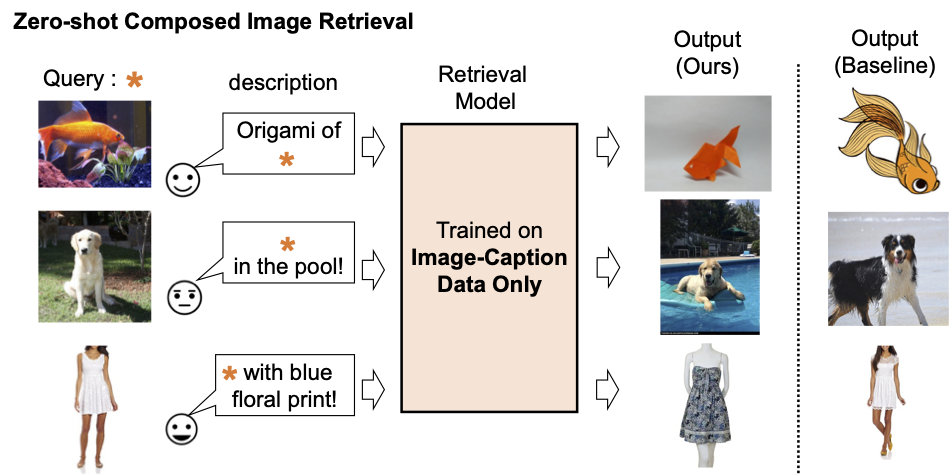
To address these challenges, in “Pic2Word: Mapping Pictures to Words for Zero-shot Composed Image Retrieval”, we propose a task called zero-shot CIR (ZS-CIR). In ZS-CIR, we aim to build a single CIR model that performs a variety of CIR tasks, such as object composition, attribute editing, or domain conversion, without requiring labeled triplet data. Instead, we propose to train a retrieval model using large-scale image-caption pairs and unlabeled images, which are considerably easier to collect than supervised CIR datasets at scale. To encourage reproducibility and further advance this space, we also release the code.
Description of existing composed image retrieval model.
We train a composed image retrieval model using image-caption data only. Our model retrieves images aligned with the composition of the query image and text.

Method overview

We propose to leverage the language capabilities of the language encoder in the contrastive language-image pre-trained model (CLIP), which excels at generating semantically meaningful language embeddings for a wide range of textual concepts and attributes. To that end, we use a lightweight mapping sub-module in CLIP that is designed to map an input picture (e.g., a photo of a cat) from the image embedding space to a word token (e.g., “cat”) in the textual input space. The whole network is optimized with the vision-language contrastive loss to again ensure the visual and text embedding spaces are as close as possible given a pair of an image and its textual description. Then, the query image can be treated as if it is a word. This enables the flexible and seamless composition of query image features and text descriptions by the language encoder. We call our method Pic2Word and provide an overview of its training process in the figure below. We want the mapped token s to represent the input image in the form of word token. Then, we train the mapping network to reconstruct the image embedding in the language embedding, p. Specifically, we optimize the contrastive loss proposed in CLIP computed between the visual embedding v and the textual embedding p.

Training of the mapping network (fM) using unlabeled images only. We optimize only the mapping network with a frozen visual and text encoder.

Given the trained mapping network, we can regard an image as a word token and pair it with the text description to flexibly compose the joint image-text query as shown in the figure below.

With the trained mapping network, we regard the image as a word token and pair it with the text description to flexibly compose the joint image-text query.

Evaluation

We conduct a variety of experiments to evaluate Pic2Word’s performance on a variety of CIR tasks.

Domain conversion

We first evaluate the capability of compositionality of the proposed method on domain conversion — given an image and the desired new image domain (e.g., sculpture, origami, cartoon, toy), the output of the system should be an image with the same content but in the new desired image domain or style. As illustrated below, we evaluate the ability to compose the category information and domain description given as an image and text, respectively. We evaluate the conversion from real images to four domains using ImageNet and ImageNet-R.

To compare with approaches that do not require supervised training data, we pick three approaches: (i) image only performs retrieval only with visual embedding, (ii) text only employs only text embedding, and (iii) image + text averages the visual and text embedding to compose the query. The comparison with (iii) shows the importance of composing image and text using a language encoder. We also compare with Combiner, which trains the CIR model on Fashion-IQ or CIRR.

We aim to convert the domain of the input query image into the one described with text, e.g., origami.

As shown in figure below, our proposed approach outperforms baselines by a large margin.

Results (recall@10, i.e., the percentage of relevant instances in the first 10 images retrieved.) on composed image retrieval for domain conversion.

Fashion attribute composition

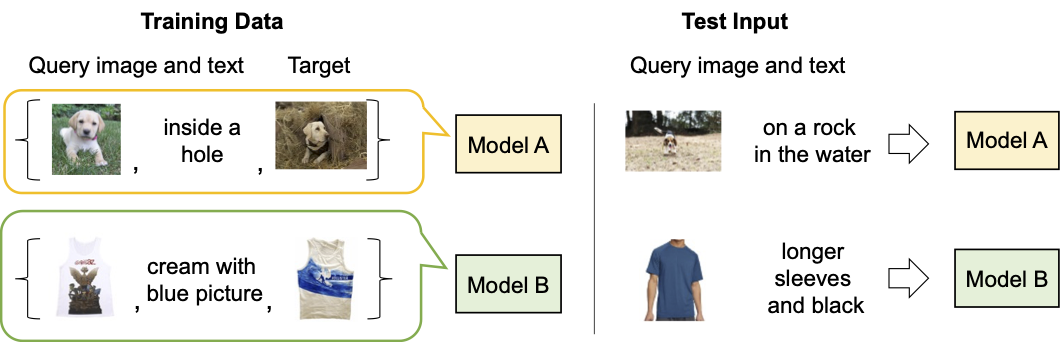
Next, we evaluate the composition of fashion attributes, such as the color of cloth, logo, and length of sleeve, using the Fashion-IQ dataset. The figure below illustrates the desired output given the query.

Overview of CIR for fashion attributes.

In the figure below, we present a comparison with baselines, including supervised baselines that utilized triplets for training the CIR model: (i) CB uses the same architecture as our approach, (ii) CIRPLANT, ALTEMIS, MAAF use a smaller backbone, such as ResNet50. Comparison to these approaches will give us the understanding on how well our zero-shot approach performs on this task.

Although CB outperforms our approach, our method performs better than supervised baselines with smaller backbones. This result suggests that by utilizing a robust CLIP model, we can train a highly effective CIR model without requiring annotated triplets.

Results (recall@10, i.e., the percentage of relevant instances in the first 10 images retrieved.) on composed image retrieval for Fashion-IQ dataset (higher is better). Light blue bars train the model using triplets. Note that our approach performs on par with these supervised baselines with shallow (smaller) backbones.

Qualitative results

We show several examples in the figure below. Compared to a baseline method that does not require supervised training data (text + image feature averaging), our approach does a better job of correctly retrieving the target image.

Qualitative results on diverse query images and text description.

Conclusion and future work

In this article, we introduce Pic2Word, a method for mapping pictures to words for ZS-CIR. We propose to convert the image into a word token to achieve a CIR model using only an image-caption dataset. Through a variety of experiments, we verify the effectiveness of the trained model on diverse CIR tasks, indicating that training on an image-caption dataset can build a powerful CIR model. One potential future research direction is utilizing caption data to train the mapping network, although we use only image data in the present work.

Acknowledgements

This research was conducted by Kuniaki Saito, Kihyuk Sohn, Xiang Zhang, Chun-Liang Li, Chen-Yu Lee, Kate Saenko, and Tomas Pfister. Also thanks to Zizhao Zhang and Sergey Ioffe for their valuable feedback.

OnePlus foldable phone could run a special version of OxygenOS

OnePlus Fold OnLeaks SmartPrix 3

  • The software on the OnePlus Open, the company’s first foldable phone, could be called OxygenOS Fold.
  • The name seems borrowed from OPPO’s ColorOS Fold software that runs on foldables like the Find N2.
  • OxygenOS Fold will likely get the same features as OPPO’s skin.

Yesterday, leaker Max Jambor revealed the possible marketing name of OnePlus’ upcoming foldable phone. Expected to be called the OnePlus Open, the device is said to come with a special version of OxygenOS. According to Twitter tipster SnoopyTech, the software will be called “OxygenOS Fold.” It is likely a version of the OnePlus skin tailored to the foldable phone’s form factor. Jambor also confirmed the name of the new OxygenOS version for the OnePlus Open by calling the leak “accurate.”

Want AT&T’s service on the cheap? Consider an AT&T MVNO instead

ATT logo stock image 2

Credit: Edgar Cervantes / Android Authority

AT&T has seen a lot of increased competition in recent years. Not only is T-Mobile giving it a run for its money, but there’s also Verizon and plenty of prepaid carriers attempting to steal customers as well. While AT&T has a fairly extensive network, it is also one of the more expensive carriers. The good news is that an AT&T MNVO can provide you access to the same network but at a much cheaper price.

In this guide, we explain what an AT&T MNVO is, why you might want to consider one, and finally, we take a brief look at the best carriers on AT&T’s network.

Nothing Phone 2 wallpapers are now up for grabs!

Nothing Phone 2 press image 2

Credit: Evan Blass
  • Nothing Phone 2 wallpapers have leaked.
  • The set includes a total of 20 wallpapers, some of which we also saw on the Nothing Phone 1.
  • You can download them from the link pasted at the end of this article.

Leaker Kamila Wojciechowska has been busy posting Nothing Phone 2 leaks on Twitter these past few hours. After confirming the camera and display specs for the phone, Wojciechowska is now treating us to all the new Nothing Phone 2 wallpapers. 

Instagram takes on Twitter with Threads, now live on Android and iOS

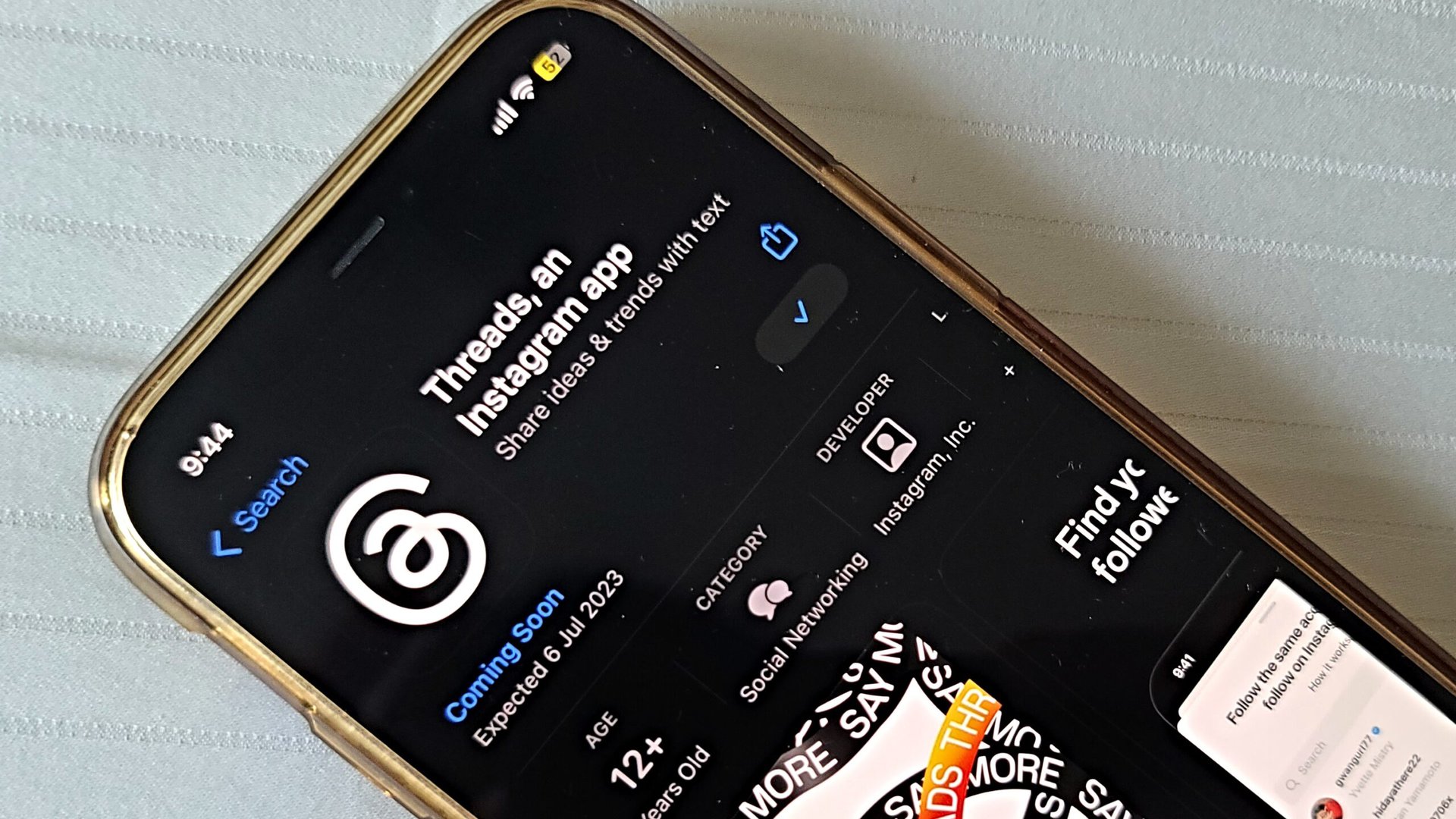
Threads app Instagram twitter

Credit: Adamya Sharma / Android Authority
  • Instagram’s Threads app is now available on Android and iOS.
  • The Twitter alternative app lets you port all of your information from Instagram.
  • You can post text, videos, and photos on Threads.

Instagram’s Twitter competitor, Threads, is now live and available for download on Android and iOS. The app is linked to Instagram, so you’ll need an account on Instagram before you can log into Threads. When you sign up for the new app, your user name and verification status will be ported over from Instagram. You’ll also be able to follow the same people you do on Instagram or choose who you’d like to follow manually from a list of suggested accounts. You can set your Threads profile to public or private, depending on your need.

Understanding Cybersecurity Risk Assessment: A Comprehensive Overview

In today’s interconnected digital landscape, cybersecurity has become a critical concern for individuals and organizations alike. One essential aspect of maintaining a robust cybersecurity posture is conducting thorough risk assessments. In this article, we will delve into the concept of cybersecurity risk assessment, exploring its purpose, process, and significance in safeguarding against cyber threats.

Defining Cybersecurity Risk Assessment: Cybersecurity risk assessment is a systematic approach that identifies, analyzes, and evaluates potential vulnerabilities, threats, and their associated risks within an organization’s information systems and networks. It involves assessing the likelihood of a security incident occurring and the potential impact it may have on an organization’s operations, assets, and reputation.

The Importance of Cybersecurity Risk Assessment: Effective risk assessment is vital for several reasons:

a. Proactive Threat Identification: By conducting risk assessments, organizations can proactively identify potential security vulnerabilities, allowing them to implement appropriate controls and preventive measures to mitigate those risks.

b. Resource Allocation: Risk assessment helps organizations allocate their resources efficiently by focusing on the most critical threats and vulnerabilities that pose significant risks to their operations.

c. Compliance and Regulatory Requirements: Many industries and jurisdictions have specific cybersecurity requirements. Risk assessments assist organizations in meeting these obligations by identifying gaps and implementing necessary security measures.

d. Decision-Making and Prioritization: Risk assessment provides valuable insights for decision-makers, allowing them to make informed choices regarding risk mitigation strategies and prioritization of security investments.

The Process of Cybersecurity Risk Assessment:The risk assessment process typically involves the following steps:

a. Asset Identification: Identify and categorize critical assets, including hardware, software, data, and networks, that need protection.

b. Threat Identification: Identify potential threats, such as malware, hacking attempts, insider threats, or social engineering, that could exploit vulnerabilities.

c. Vulnerability Assessment: Evaluate the existing security controls and identify vulnerabilities within the organization’s systems and networks.

d. Risk Analysis: Analyze the likelihood and potential impact of identified threats exploiting vulnerabilities to determine the level of risk.

e. Risk Evaluation: Evaluate the identified risks based on predefined criteria, such as impact, likelihood, and risk tolerance levels.

f. Risk Treatment: Develop and implement risk mitigation strategies, including safeguards, policies, procedures, and incident response plans, to reduce the identified risks to an acceptable level.

g. Ongoing Monitoring and Review: Continuously monitor and reassess the effectiveness of implemented controls and regularly review the risk assessment process to adapt to emerging threats and changes in the organization’s environment.

Challenges and Considerations:

While conducting a cybersecurity risk assessment, organizations must be aware of certain challenges and considerations:

a. Evolving Threat Landscape: Cyber threats are continuously evolving, requiring organizations to stay updated with the latest threat intelligence and adjust their risk assessments accordingly.

b. Resource Constraints: Conducting thorough risk assessments can be resource-intensive. Organizations should allocate sufficient time, budget, and skilled personnel to ensure the effectiveness of the process.

c. Third-Party Risk: Organizations must assess the cybersecurity risks posed by third-party vendors and partners with access to their systems and data.

d. Regular Reviews: Risk assessments should be periodically reviewed and updated to account for changes in technology, business processes, or regulatory requirements.

Conclusion:

Cybersecurity risk assessment is a fundamental component of a robust cybersecurity strategy. By systematically identifying and evaluating potential risks, organizations can proactively protect their valuable assets and sensitive information. Implementing a comprehensive risk assessment process allows organizations to make informed decisions, allocate resources effectively, and establish strong defenses against cyber threats in an ever-changing digital landscape.

The post Understanding Cybersecurity Risk Assessment: A Comprehensive Overview appeared first on Cybersecurity Insiders.

Ransomware attacks on manufacturing sector proving successful

A recent survey conducted by cybersecurity firm Sophos reveals that ransomware groups targeting manufacturing sector servers have achieved a high success rate in encrypting data and extorting ransoms from their victims.

The report titled “The State of Ransomware in Manufacturing and Production 2023” highlights that attacks on manufacturing firms have proven successful in 70% of cases, with hackers capitalizing on network vulnerabilities to gain unauthorized access.

Interestingly, the manufacturing sector, being one of the most heavily impacted industries, has begun to prioritize data backup and recovery solutions. By investing in these solutions, companies are proactively preparing themselves to swiftly resume operations in the event of a malware attack.

Backing up data and leveraging it for seamless continuity in the face of ransomware attacks is a logical approach. It not only eliminates the need to pay a ransom for decryption keys but also minimizes the impact of downtime.

In 2022, Sophos researchers discovered that 77% of businesses experienced revenue loss due to ransomware attacks. This means that affected organizations not only incur the costs associated with downtime but also have to address the subsequent risks, such as customer and partner attrition, as well as the recovery process.

Therefore, investing in data backups is a prudent decision, as it ensures prompt response upon detection and reduces the time required for business recovery.

It is important to note that paying a ransom does not guarantee the receipt of a decryption key. Furthermore, hackers may repeatedly target the same organization throughout the year. In double extortion attacks, paying the ransom does not guarantee the deletion of stolen data from the criminals’ servers.

The post Ransomware attacks on manufacturing sector proving successful appeared first on Cybersecurity Insiders.

Not seen enough of the Nothing Phone 2? Here are more leaked ‘official’ images

Nothing Phone 2 press image 2

Credit: Evan Blass
  • Marketing images of the Nothing Phone 2 have leaked.
  • They’ll let you zoom into every design detail, including the new Glyph interface and reworked UI.

Leaks are in full swing as we count down the days to the launch of Nothing’s second smartphone. The Nothing Phone 2 has now appeared in what look like official marketing images from the company. Of course, these pictures weren’t shared by Nothing but by trusted leaker Evan Blass.

Twitter opens up about those pesky new tweet-reading limits on the platform

Twitter stock photos 15

Credit: Edgar Cervantes / Android Authority
  • Twitter has clarified its latest move to impose limits on the platform.
  • The company says any advance notice to users about the limits would have prompted bad actors and bots to evade detection.
  • The platform says that the rate limits affect only a small percentage of users and have had a minimal effect on advertising.

Elon Musk shocked users last week when he announced “temporary” limits to the number of tweets they could read on the platform. Unregistered users were also blocked from viewing tweets. While some argued that the company is simply attempting to cut costs, Twitter has now published a blog post further clarifying the reason behind its sudden and highly unpopular move.

Threads, Meta’s Twitter rival, is ready to take off on July 6

Threads By Instagram

Credit: Adamya Sharma / Android Authority
  • The Twitter-rival Threads app from Meta is now available for pre-order on iOS.
  • The app is expected to go live on July 6.
  • Downloads for Android should also start soon.

Meta is all set to launch “Threads,” its answer to Twitter’s dwindling fame. The app is now available for pre-order on the iOS App Store, with a July 6 release date mentioned on its app page. A webpage for the Instagram-linked service is also live now, with a launch countdown and a QR code that redirects to the app’s iOS and Android download links. Unfortunately, you can only pre-download the iOS version right now, as the Android link isn’t up yet.

Want the Uncarrier’s service on the cheap? Consider a T-Mobile MVNO instead

T Mobile logo on phone stock photo

Credit: Edgar Cervantes / Android Authority

T-Mobile is known for having the cheapest plans out of all three of the major postpaid carriers by a fairly wide margin. Unfortunately, the Uncarrier’s prices have crept closer to its competition recently. While T-Mobile still offers competitive pricing, the cheapest way to enjoy T-Mobile is to use a T-Mobile MVNO.

In this guide, we explain what a T-Mobile MVNO is, why you might want to consider one, and finally, we take a brief look at the best carriers on T-Mobile’s network.

Galaxy Watch doesn’t work on tattooed wrist? Samsung’s working on a fix

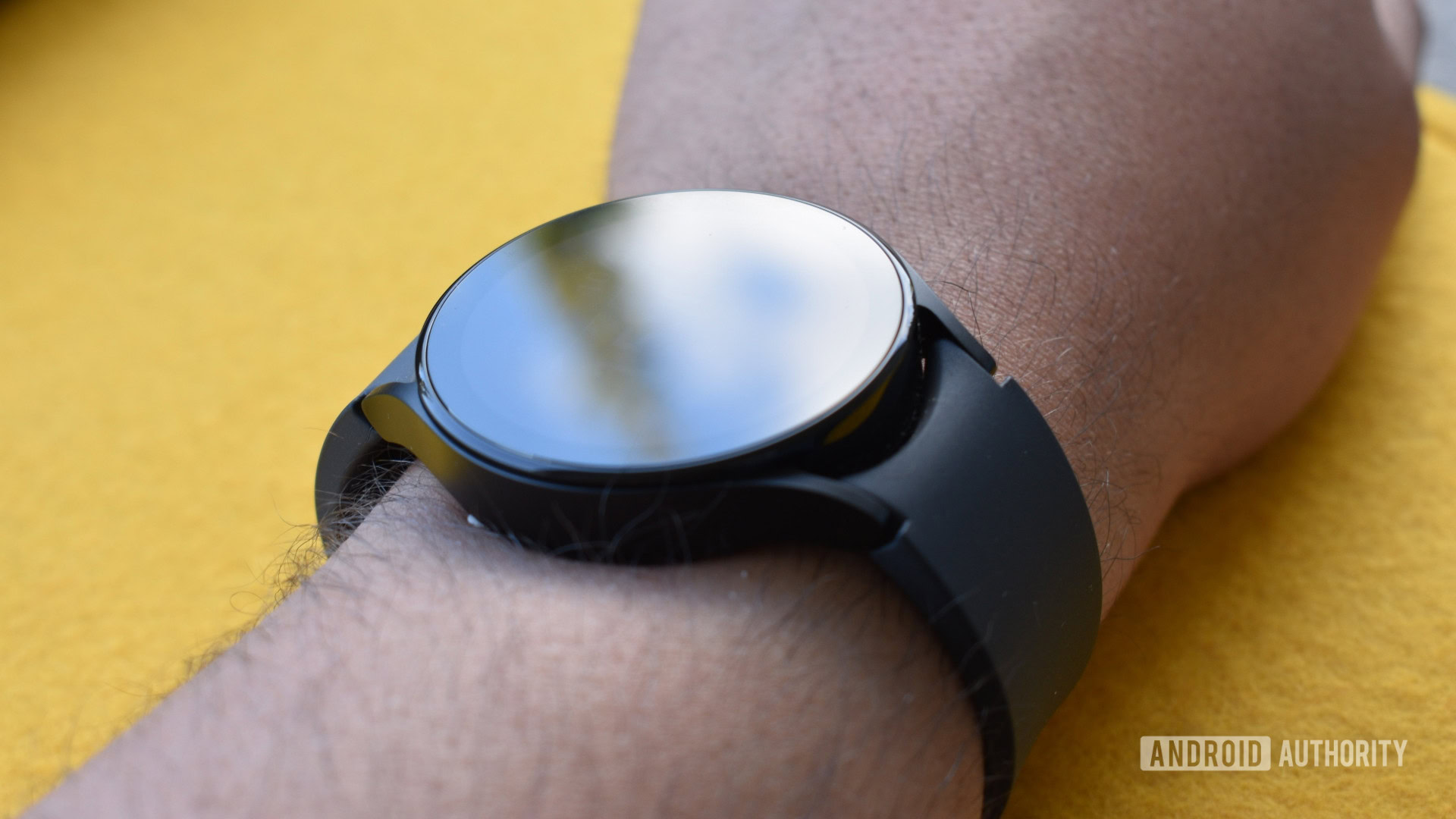
Samsung Galaxy Watch 5 durable watch face

Credit: Andy Walker / Android Authority
  • Samsung’s smartwatches could soon become better at working on tattooed wrists.

  • A Samsung community moderator has confirmed that the company’s developers are working to improve wearing detection for users who have tattoos on their wrists.
  • The feature should roll out later this year.

If you’re having a hard time using your Galaxy Watch because of tattoos on your wrist, you’re not alone. The problem isn’t even restricted to Samsung’s smartwatches. It’s a common hurdle folks with wrist tattoos face when it comes to most wearables, be it a Galaxy Watch, an Apple Watch, or any other smartwatch that relies on optical sensors to measure biometric data. These sensors have difficulty seeing through tattoo ink, and in many cases, wearing detection fails to function correctly. Fortunately, it seems at least Samsung has a solution in the works.

-- Get the right stuff from a partner you trust. --

Partners

-- IT NEWS --

Blog

admin December 11th, 2025

Credit: Edgar Cervantes / Android Authority TL;DR Spotify is getting a new “Prompted Playlist” feature to help users create more […]

admin December 11th, 2025

TL;DR Four of the best Good Lock modules aren’t working properly on the One UI 8.5 beta. Home Up and […]

admin December 10th, 2025

This is an open thread. We want to hear from you! Share your thoughts in the comments and vote in […]