Cyber Attack on Norway govt websites identified to Ivanti Security vulnerability

A few days ago, several of the websites operated by Norwegian government were disrupted because of a possible cyber-attack. US-CISA has issued a statement that hackers exploited a flaw in the API flow of Ivanti Endpoint Manager Mobile (EPMM) formerly known as MobileIron Core.

Classified as CVE-2023-35078 vulnerability with a severity score of 9 out of 10, the flaw allows a hacker bypass the user authentication function, giving him/her the access to some of the EPMM Functions and resources.

Ivanti stated that the versions that were exploited are EPMM versions 11.4, 11.10,11.9.11.8 and added that even the older versions are also at risk.

Remediation efforts have been conducted with the availability of RPM script and the fix.

The IT software services provider stated that the zero-day vulnerability has only hit a small cluster of its customers and all those affected were informed via proper channel.

Most impacted was Norway’s Department Security and Service Organization (DSS) along with the National Security Authority.

Currently, the investigation is under progress and so Ivanti did not name any actors or groups suspected behind the incident.

NOTE 1- In January 2017, Clearlake Capital, the parent company of Heat Software acquired LANDESK from Thoma Bravo and in the same month it merged Heat and Landesk to form Ivanti.

NOTE 2- In September 2020, Ivanti acquired Unified Endpoint Management Company MobileIron for $870M and merged the tech to form its Ivanti Endpoint Manager Mobile (EPMM).

The post Cyber Attack on Norway govt websites identified to Ivanti Security vulnerability appeared first on Cybersecurity Insiders.

Windows computer randomly restarts? Here’s how to fix it

Short of critical components dying or losing data, one of the worst things on a Windows PC is a random restart. At best it’s extremely inconvenient, and at worst you might lose all your progress on a critical task, forcing you to do the work over again. Below we’ll explore the potential causes of restarts and what you might do to fix them.

JUMP TO KEY SECTIONS

The best phone deals of July 2023

Google Pixel 7a and Pixel Fold opened up on table 1

Credit: Kris Carlon / Android Authority

Buying a new phone is an important purchase for many people. You probably use it every day and more than any other device, so you’ll want to pick one that’s just right. It’s easy to spend hours scouring the web for the best offers, but we’ve done the legwork for you. We’ve gathered some of the best phone deals available to save you time and money.

We’re mainly sticking with unlocked deals for now, but we’ve thrown in some of the best carrier offers too. We’ve noted where devices are international versions that may not be suitable on your carrier, but make sure to check carefully before you buy.

The Crucial Role of Time Stamps in Data Security

In today’s interconnected digital world, data security has become a paramount concern for individuals, organizations, and governments alike. Protecting sensitive information from unauthorized access and ensuring its integrity is of utmost importance. One effective tool that plays a vital role in bolstering data security is the use of time stamps. This article explores how time stamps contribute to enhancing data security and safeguarding valuable information.

Verification and Non-Repudiation: Time stamps provide a reliable means to verify the authenticity and integrity of data. By associating a specific time and date with a piece of information or a transaction, time stamps create an indelible record that cannot be altered retroactively. This ensures non-repudiation, preventing parties from denying their involvement or tampering with data, as the time stamp serves as an immutable proof of when the data was generated or modified.

Audit Trails and Forensic Analysis: In data security, maintaining audit trails is essential for tracking and investigating any unauthorized access or malicious activities. Time stamps play a crucial role in creating comprehensive and accurate audit logs. By appending time stamps to log entries, security professionals can precisely track events and establish a timeline of actions, aiding in forensic analysis and incident response. Time-stamped audit trails provide valuable insights into the chain of events, helping identify security breaches and facilitating timely mitigation measures.

Regulatory Compliance: Time stamping is often a requirement for regulatory compliance in various industries, including finance, healthcare, and legal sectors. Regulations such as the General Data Protection Regulation (GDPR) and the Health Insurance Portability and Accountability Act (HIPAA) mandate the use of time stamps to demonstrate compliance with data protection and privacy requirements. By employing time stamps, organizations can ensure their data security practices align with regulatory standards, avoiding penalties and legal implications.

Data Integrity and Tamper Detection: Time stamps play a crucial role in ensuring the integrity of data. By associating a time stamp with a specific data set, any unauthorized modifications or tampering attempts become evident. Advanced cryptographic techniques, such as digital signatures and hash functions, can be combined with time stamps to create secure and verifiable data structures. This enables the detection of any alterations or unauthorized changes made to the data since its time of creation or last modification.

Long-Term Archiving and Preservation: In certain industries, data needs to be preserved for extended periods, sometimes spanning years or even decades. Time stamps facilitate long-term archiving and preservation by providing a reliable reference point for the chronological order of stored data. By associating time stamps with archived information, organizations can ensure the integrity and authenticity of stored data over time, mitigating the risk of data degradation or manipulation.

Conclusion:

Time stamps are an invaluable tool for enhancing data security. By providing verification, non-repudiation, audit trails, compliance support, data integrity, and long-term preservation, time stamps contribute significantly to safeguarding sensitive information. Organizations and individuals should leverage the power of time stamps in their data security strategies to bolster protection, establish accountability, and maintain the integrity of their valuable data assets in an ever-evolving digital landscape.

The post The Crucial Role of Time Stamps in Data Security appeared first on Cybersecurity Insiders.

Sophos gets startled by Sophos Encrypt Ransomware

Cybersecurity firm Sophos has released a media update that it doesn’t have any association with the newly discovered Sophos Encrypt Ransomware and is busy investigating its whereabouts and inception.

A couple of days ago, MalwareHunter Team investigated and disclosed a new file encrypting malware variant named SophosEncrypt on the prowl. Initially it was thought to be an encryptor developed by the technical team of Sophos X-Ops for some testing. But now it is assumed to be a ‘Red Flag’ that is now under the lens of detailed investigation.

Meanwhile, researchers from the same firm have reported that 71% of companies on a worldwide note were infected by ransomware and how they are introducing different tactics to negotiate ransom payments.

Whatsoever, such payments are often concealed as it takes place between the victim and the attacker. That’s partly because the law enforcement agencies like FBI have issued a warning to victims not to make any payouts as it not only encourages crime, but doesn’t guaranty a decryption key for sure. All because such payments are made in cryptocurrency that remain anonymous and the funds can be availed from anywhere in the world.

NOTE- For the past few months, some web development companies in Australia, UK and Singapore are into the business of negotiating ransomware payments. These companies contact the victim and negotiate a deal that seems to work for the victim and the hacker in every way. But the practice has been identified by the Interpol and has been labeled as a crime. Thus, those companies (not the experts from security firms) that are into the business of negotiating ransom payouts will be eligible for prosecution and those involved in the said crime in any way or form are eligible for penalties or jail terms.

The post Sophos gets startled by Sophos Encrypt Ransomware appeared first on Cybersecurity Insiders.

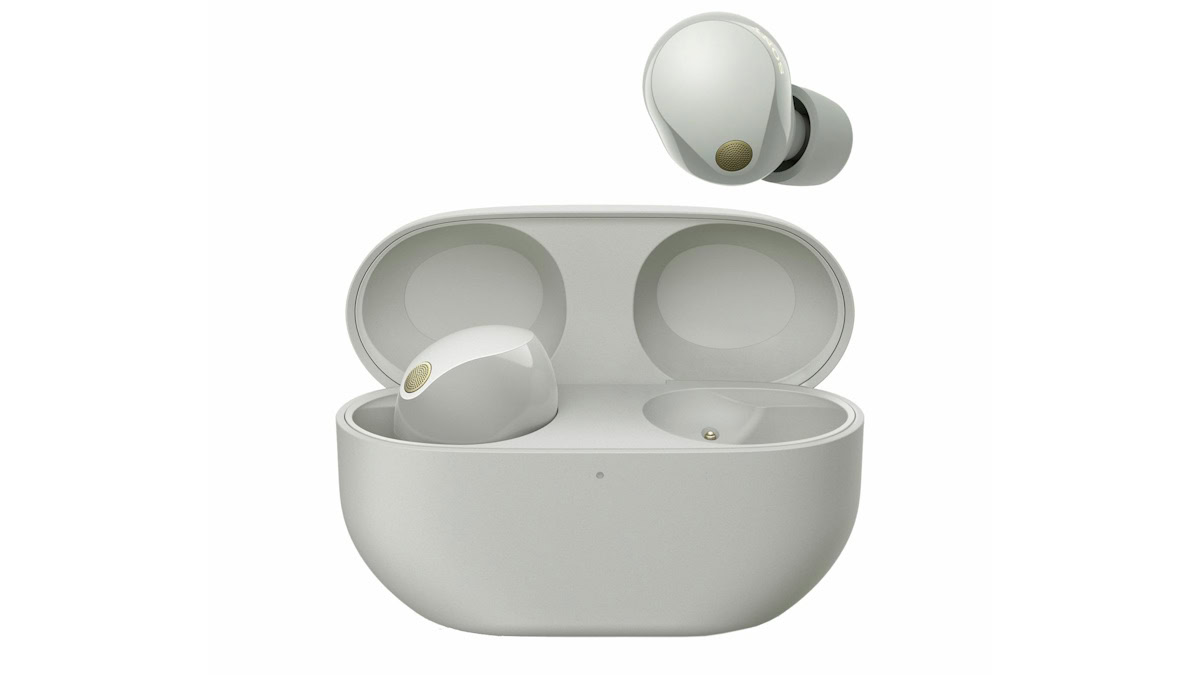
Sony WF-1000XM5 earbuds finally have an official launch date

Sony WF 1000XM5 leaked render

Credit: WinFuture
  • Sony has scheduled a launch event for next week.
  • The company will most likely announce the WF-1000XM5 earbuds on the day.
  • The teaser for the upcoming launch suggests Sony has made major improvements to noise cancelation on the new flagship buds.

Sony is teasing a launch event for next week and we’re pretty sure it’s when the company will announce the new WF-1000XM5 earbuds. The unveiling is scheduled for July 24 at 12 PM ET. The teaser posted by Sony Electronics on Twitter describes the upcoming buds as “The Best Silence Drops.” The tweet’s text reads — “For the silence. For the sound” — strongly suggesting the launch of the WF-1000XM5 with improved Active Noise Cancelation.

OnePlus 12 should arrive globally like clockwork (Updated: Coming even earlier!)

OnePlus 12 Leaked Render 3

  • The OnePlus 12 is now expected to arrive globally in January 2024.
  • The phone is believed to launch in China this December.
  • OnePlus is expected to unveil at least three more phones before the OnePlus 12, including the foldable OnePlus Open.

Update: July 19, 2023 (12:06 AM ET): Tipster Max Jambor has refuted the previous leak about the OnePlus 12’s global launch. Per Jambor, the phone will hit global markets in January instead of February, as mentioned in the original article below.

Tired of hunting Pokemon? Google’s new AR game will let you take down aliens

  • Google and game Japanese game developer Taito have released a new Space Invaders Augmented Reality game.
  • It allows players to blast aliens in the real world around them.
  • The game is now available to download on ARCore-supported Android devices and will soon become available on iOS too.

Google and Taito have released a new Augmented Reality game that lets you take down virtual aliens in the real world around you using your phone. Called Space Invaders: World Defense, the game was created in honor of the 45th anniversary of the original Space Invaders video game.

In the new World Defense game, Space Invaders will spawn from buildings and rooftops, hide behind structures, and hover in the sky. So instead of Pokemon, you’ll be hunting for aliens. Google’s blog post says players can discover new Space Invaders in and around different neighborhoods. Players can also unlock special power-ups, team-up with other players, and share their achievements on social media with an AR selfie.

Gotrax GXL V2 review: A budget-friendly beginner e-scooter

The Gotrax GXL V2 is billed as the go-to short-distance commuter electric scooter, but does it stand up to testing? With an affordable price point, modest speeds, and simple controls, it’s easy for anyone to hop on and zip around without prior experience. However, there are some downsides to consider. Here’s a hands-on Gotrax GXL V2 review to help you decide if you should go ahead and buy it.

Gotrax GXL V2 Electric Scooter


$279 at Amazon

Save $
520.99

Gotrax GXL V2 review: At a glance

  • What is it? The Gotrax GXL V2 is a small, affordable, entry-level electric scooter. It has one 250W motor, providing 12 miles of range and a top speed of 15.5 mph.
  • What is the price? The Gotrax GXL V2 costs $399.
  • Where can you buy it? You can buy the Gotrax GXL V2 from Amazon or directly from Gotrax.
  • How did we test it? I tested the Gotrax GXL V2 for one week. Android Authority purchased the review unit.
  • Is it worth it? The Gotrax GXL V2 is a suitable electric scooter for kids, first-time riders, or those who want a compact scooter for recreational rides. It is not recommended for long-distance commutes or off-road use as there is no suspension, and the tires are small.

What I like about the Gotrax GXL V2

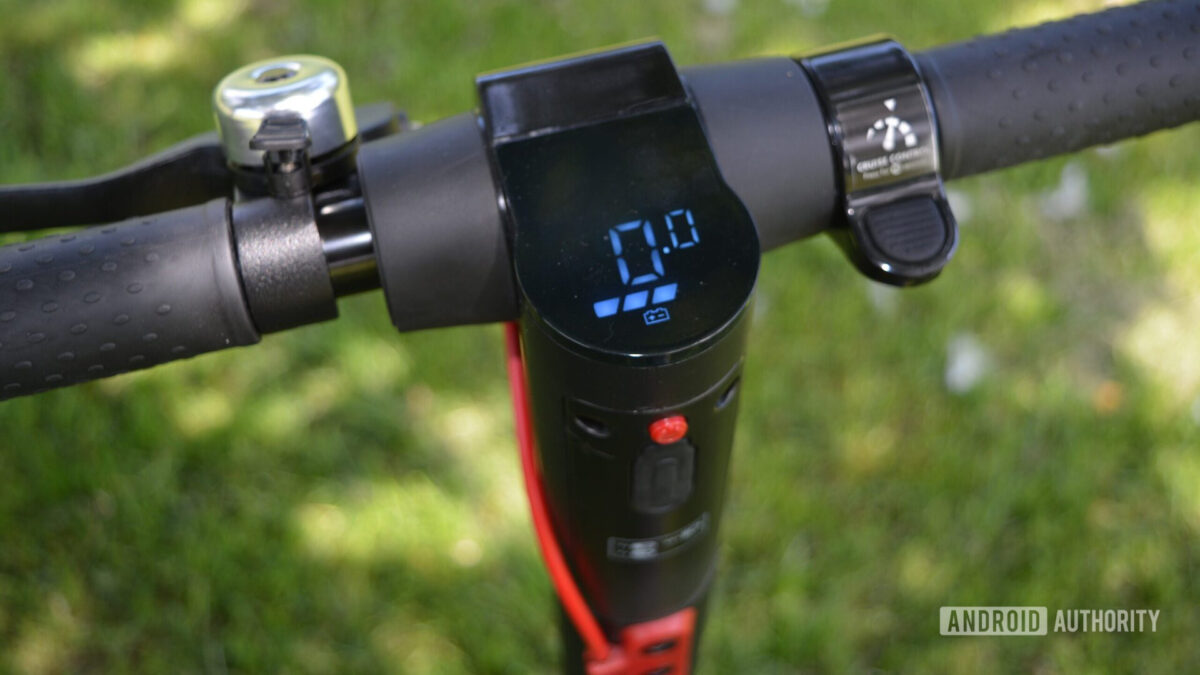
gotrax gxl v2 console

YouTube quietly rolls out new ‘Stable Volume’ feature

YouTube on smartphone stock photo 18

Credit: Edgar Cervantes / Android Authority
  • YouTube is getting a new feature called Stable Volume in the video settings.
  • The feature is expected to even out the volume across videos on YouTube.
  • It hasn’t been rolled out to all YouTube users yet.

It seems YouTube is rolling out a new “Stable Volume” feature on its app. The platform hasn’t said what the feature does, and it doesn’t look like everyone has it just yet. The feature was spotted by a few folks, including a Redditor and YouTuber M. Brandon Lee. It reportedly appears under the Ambient mode option on the video settings page.

What is Microsoft 365 Copilot? The AI coming to Word, Excel, and more

microsoft 365 copilot hero

Credit: Microsoft

Microsoft has dominated the tech news cycle in recent months, thanks to its $10 billion investment in ChatGPT creator OpenAI and a flurry of new releases like Bing Chat. The Redmond giant isn’t stopping there either as it’s now poised to roll out a new AI-powered assistant in its office suite. Dubbed Microsoft 365 Copilot, the feature will automate tasks like writing emails, summarizing meetings, and even making beautiful PowerPoint presentations. All of this may sound too good to be true, but Microsoft’s early demos look promising.

So in this article, let’s take a closer look at Microsoft 365 Copilot, what it can do, and how you can use it.

If the rotating bezel is back, I’ll hit ‘check out’ on a Galaxy Watch 6

A Galaxy Watch 4 Classic represents Samsung's 2021 wearable with a rotating bezel.

Credit: Kaitlyn Cimino / Android Authority

Opinion post by
Kaitlyn Cimino

It’s that time of year when the next best thing in wearables isn’t just a pipe dream, it’s right around the corner. For Samsung, all eyes are on the trickle of leaks linked to the Galaxy Watch 6. We’ve seen model numbers and we’ve seen potential specs, but the most exciting rumor to catch my attention is that of a possible rotating bezel. The fan-favorite feature hasn’t been seen on wrists since 2021’s Galaxy Watch 4 Classic and was completely absent in last year’s lineup. If Samsung reincarnates the rotating bezel on the incoming Galaxy Watch 6, I’ll be hard-pressed not to upgrade.

As the smudges across my tablet suggest, I’m not shy when it comes to touchscreens. On a smartwatch, however, the significantly smaller target area often results in miss-taps and frustration, especially if I’m already winded from a workout I never felt like starting.

Symbol tuning improves in-context learning in language models

A key feature of human intelligence is that humans can learn to perform new tasks by reasoning using only a few examples. Scaling up language models has unlocked a range of new applications and paradigms in machine learning, including the ability to perform challenging reasoning tasks via in-context learning. Language models, however, are still sensitive to the way that prompts are given, indicating that they are not reasoning in a robust manner. For instance, language models often require heavy prompt engineering or phrasing tasks as instructions, and they exhibit unexpected behaviors such as performance on tasks being unaffected even when shown incorrect labels.

In “Symbol tuning improves in-context learning in language models”, we propose a simple fine-tuning procedure that we call symbol tuning, which can improve in-context learning by emphasizing input–label mappings. We experiment with symbol tuning across Flan-PaLM models and observe benefits across various settings.

  • Symbol tuning boosts performance on unseen in-context learning tasks and is much more robust to underspecified prompts, such as those without instructions or without natural language labels.
  • Symbol-tuned models are much stronger at algorithmic reasoning tasks.
  • Finally, symbol-tuned models show large improvements in following flipped-labels presented in-context, meaning that they are more capable of using in-context information to override prior knowledge.
An overview of symbol tuning, where models are fine-tuned on tasks where natural language labels are replaced with arbitrary symbols. Symbol tuning relies on the intuition that when instruction and relevant labels are not available, models must use in-context examples to learn the task.

Motivation

Instruction tuning is a common fine-tuning method that has been shown to improve performance and allow models to better follow in-context examples. One shortcoming, however, is that models are not forced to learn to use the examples because the task is redundantly defined in the evaluation example via instructions and natural language labels. For example, on the left in the figure above, although the examples can help the model understand the task (sentiment analysis), they are not strictly necessary since the model could ignore the examples and just read the instruction that indicates what the task is.

In symbol tuning, the model is fine-tuned on examples where the instructions are removed and natural language labels are replaced with semantically-unrelated labels (e.g., “Foo,” “Bar,” etc.). In this setup, the task is unclear without looking at the in-context examples. For example, on the right in the figure above, multiple in-context examples would be needed to figure out the task. Because symbol tuning teaches the model to reason over the in-context examples, symbol-tuned models should have better performance on tasks that require reasoning between in-context examples and their labels.

Datasets and task types used for symbol tuning.

Symbol-tuning procedure

We selected 22 publicly-available natural language processing (NLP) datasets that we use for our symbol-tuning procedure. These tasks have been widely used in the past, and we only chose classification-type tasks since our method requires discrete labels. We then remap labels to a random label from a set of ~30K arbitrary labels selected from one of three categories: integers, character combinations, and words.

For our experiments, we symbol tune Flan-PaLM, the instruction-tuned variants of PaLM. We use three different sizes of Flan-PaLM models: Flan-PaLM-8B, Flan-PaLM-62B, and Flan-PaLM-540B. We also tested Flan-cont-PaLM-62B (Flan-PaLM-62B at 1.3T tokens instead of 780B tokens), which we abbreviate as 62B-c.

We use a set of ∼300K arbitrary symbols from three categories (integers, character combinations, and words). ∼30K symbols are used during tuning and the rest are held out for evaluation.

Experimental setup

We want to evaluate a model’s ability to perform unseen tasks, so we cannot evaluate on tasks used in symbol tuning (22 datasets) or used during instruction tuning (1.8K tasks). Hence, we choose 11 NLP datasets that were not used during fine-tuning.

In-context learning

In the symbol-tuning procedure, models must learn to reason with in-context examples in order to successfully perform tasks because prompts are modified to ensure that tasks cannot simply be learned from relevant labels or instructions. Symbol-tuned models should perform better in settings where tasks are unclear and require reasoning between in-context examples and their labels. To explore these settings, we define four in-context learning settings that vary the amount of reasoning required between inputs and labels in order to learn the task (based on the availability of instructions/relevant labels)

Depending on the availability of instructions and relevant natural language labels, models may need to do varying amounts of reasoning with in-context examples. When these features are not available, models must reason with the given in-context examples to successfully perform the task.

Symbol tuning improves performance across all settings for models 62B and larger, with small improvements in settings with relevant natural language labels (+0.8% to +4.2%) and substantial improvements in settings without relevant natural language labels (+5.5% to +15.5%). Strikingly, when relevant labels are unavailable, symbol-tuned Flan-PaLM-8B outperforms FlanPaLM-62B, and symbol-tuned Flan-PaLM-62B outperforms Flan-PaLM-540B. This performance difference suggests that symbol tuning can allow much smaller models to perform as well as large models on these tasks (effectively saving ∼10X inference compute).

Large-enough symbol-tuned models are better at in-context learning than baselines, especially in settings where relevant labels are not available. Performance is shown as average model accuracy (%) across eleven tasks.

Algorithmic reasoning

We also experiment on algorithmic reasoning tasks from BIG-Bench. There are two main groups of tasks: 1) List functions — identify a transformation function (e.g., remove the last element in a list) between input and output lists containing non-negative integers; and 2) simple turing concepts — reason with binary strings to learn the concept that maps an input to an output (e.g., swapping 0s and 1s in a string).

On the list function and simple turing concept tasks, symbol tuning results in an average performance improvement of 18.2% and 15.3%, respectively. Additionally, Flan-cont-PaLM-62B with symbol tuning outperforms Flan-PaLM-540B on the list function tasks on average, which is equivalent to a ∼10x reduction in inference compute. These improvements suggest that symbol tuning strengthens the model’s ability to learn in-context for unseen task types, as symbol tuning did not include any algorithmic data.

Symbol-tuned models achieve higher performance on list function tasks and simple turing concept tasks. (A–E): categories of list functions tasks. (F): simple turing concepts task.

Flipped labels

In the flipped-label experiment, labels of in-context and evaluation examples are flipped, meaning that prior knowledge and input-label mappings disagree (e.g., sentences containing positive sentiment labeled as “negative sentiment”), thereby allowing us to study whether models can override prior knowledge. Previous work has shown that while pre-trained models (without instruction tuning) can, to some extent, follow flipped labels presented in-context, instruction tuning degraded this ability.

We see that there is a similar trend across all model sizes — symbol-tuned models are much more capable of following flipped labels than instruction-tuned models. We found that after symbol tuning, Flan-PaLM-8B sees an average improvement across all datasets of 26.5%, Flan-PaLM-62B sees an improvement of 33.7%, and Flan-PaLM-540B sees an improvement of 34.0%. Additionally, symbol-tuned models achieve similar or better than average performance as pre-training–only models.

Symbol-tuned models are much better at following flipped labels presented in-context than instruction-tuned models are.

Conclusion

We presented symbol tuning, a new method of tuning models on tasks where natural language labels are remapped to arbitrary symbols. Symbol tuning is based off of the intuition that when models cannot use instructions or relevant labels to determine a presented task, it must do so by instead learning from in-context examples. We tuned four language models using our symbol-tuning procedure, utilizing a tuning mixture of 22 datasets and approximately 30K arbitrary symbols as labels.

We first showed that symbol tuning improves performance on unseen in-context learning tasks, especially when prompts do not contain instructions or relevant labels. We also found that symbol-tuned models were much better at algorithmic reasoning tasks, despite the lack of numerical or algorithmic data in the symbol-tuning procedure. Finally, in an in-context learning setting where inputs have flipped labels, symbol tuning (for some datasets) restores the ability to follow flipped labels that was lost during instruction tuning.

Future work

Through symbol tuning, we aim to increase the degree to which models can examine and learn from input–label mappings during in-context learning. We hope that our results encourage further work towards improving language models’ ability to reason over symbols presented in-context.

Acknowledgements

The authors of this post are now part of Google DeepMind. This work was conducted by Jerry Wei, Le Hou, Andrew Lampinen, Xiangning Chen, Da Huang, Yi Tay, Xinyun Chen, Yifeng Lu, Denny Zhou, Tengyu Ma, and Quoc V. Le. We would like to thank our colleagues at Google Research and Google DeepMind for their advice and helpful discussions.


An open-source gymnasium for machine learning assisted computer architecture design

Computer Architecture research has a long history of developing simulators and tools to evaluate and shape the design of computer systems. For example, the SimpleScalar simulator was introduced in the late 1990s and allowed researchers to explore various microarchitectural ideas. Computer architecture simulators and tools, such as gem5, DRAMSys, and many more have played a significant role in advancing computer architecture research. Since then, these shared resources and infrastructure have benefited industry and academia and have enabled researchers to systematically build on each other’s work, leading to significant advances in the field.

Nonetheless, computer architecture research is evolving, with industry and academia turning towards machine learning (ML) optimization to meet stringent domain-specific requirements, such as ML for computer architecture, ML for TinyML accelerationDNN accelerator datapath optimization, memory controllers, power consumption, security, and privacy. Although prior work has demonstrated the benefits of ML in design optimization, the lack of strong, reproducible baselines hinders fair and objective comparison across different methods and poses several challenges to their deployment. To ensure steady progress, it is imperative to understand and tackle these challenges collectively.

To alleviate these challenges, in “ArchGym: An Open-Source Gymnasium for Machine Learning Assisted Architecture Design”, accepted at ISCA 2023, we introduced ArchGym, which includes a variety of computer architecture simulators and ML algorithms. Enabled by ArchGym, our results indicate that with a sufficiently large number of samples, any of a diverse collection of ML algorithms are capable of finding the optimal set of architecture design parameters for each target problem; no one solution is necessarily better than another. These results further indicate that selecting the optimal hyperparameters for a given ML algorithm is essential for finding the optimal architecture design, but choosing them is non-trivial. We release the code and dataset across multiple computer architecture simulations and ML algorithms.

Challenges in ML-assisted architecture research

ML-assisted architecture research poses several challenges, including:

  1. For a specific ML-assisted computer architecture problem (e.g., finding an optimal solution for a DRAM controller) there is no systematic way to identify optimal ML algorithms or hyperparameters (e.g., learning rate, warm-up steps, etc.). There is a wider range of ML and heuristic methods, from random walk to reinforcement learning (RL), that can be employed for design space exploration (DSE). While these methods have shown noticeable performance improvement over their choice of baselines, it is not evident whether the improvements are because of the choice of optimization algorithms or hyperparameters.

    Thus, to ensure reproducibility and facilitate widespread adoption of ML-aided architecture DSE, it is necessary to outline a systematic benchmarking methodology.

  2. While computer architecture simulators have been the backbone of architectural innovations, there is an emerging need to address the trade-offs between accuracy, speed, and cost in architecture exploration. The accuracy and speed of performance estimation widely varies from one simulator to another, depending on the underlying modeling details (e.g., cycleaccurate vs. MLbased proxy models). While analytical or ML-based proxy models are nimble by virtue of discarding low-level details, they generally suffer from high prediction error. Also, due to commercial licensing, there can be strict limits on the number of runs collected from a simulator. Overall, these constraints exhibit distinct performance vs. sample efficiency trade-offs, affecting the choice of optimization algorithm for architecture exploration.

    It is challenging to delineate how to systematically compare the effectiveness of various ML algorithms under these constraints.

  3. Finally, the landscape of ML algorithms is rapidly evolving and some ML algorithms need data to be useful. Additionally, rendering the outcome of DSE into meaningful artifacts such as datasets is critical for drawing insights about the design space.

    In this rapidly evolving ecosystem, it is consequential to ensure how to amortize the overhead of search algorithms for architecture exploration. It is not apparent, nor systematically studied how to leverage exploration data while being agnostic to the underlying search algorithm.

ArchGym design

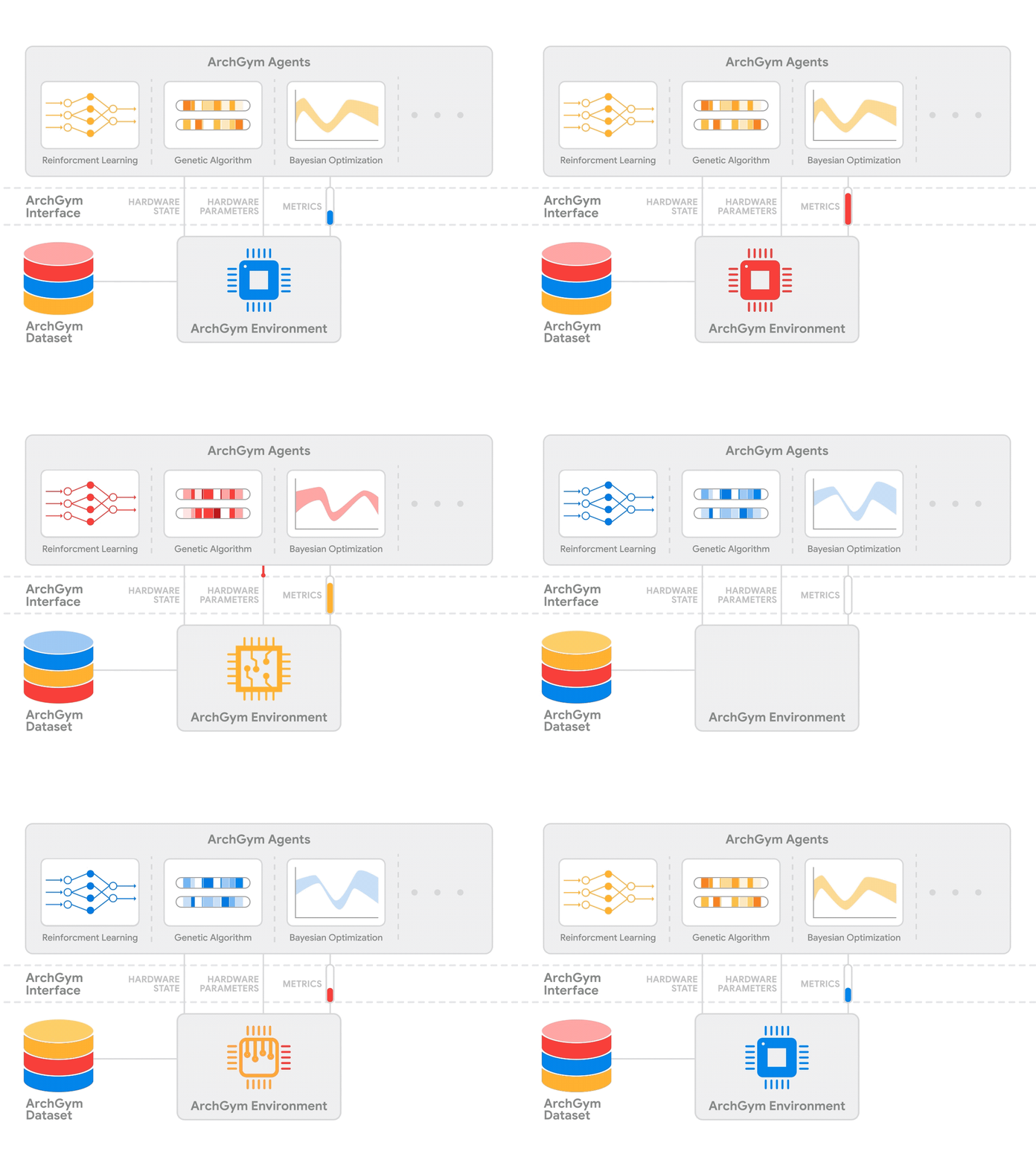
ArchGym addresses these challenges by providing a unified framework for evaluating different ML-based search algorithms fairly. It comprises two main components: 1) the ArchGym environment and 2) the ArchGym agent. The environment is an encapsulation of the architecture cost model — which includes latency, throughput, area, energy, etc., to determine the computational cost of running the workload, given a set of architectural parameters — paired with the target workload(s). The agent is an encapsulation of the ML algorithm used for the search and consists of hyperparameters and a guiding policy. The hyperparameters are intrinsic to the algorithm for which the model is to be optimized and can significantly influence performance. The policy, on the other hand, determines how the agent selects a parameter iteratively to optimize the target objective.

Notably, ArchGym also includes a standardized interface that connects these two components, while also saving the exploration data as the ArchGym Dataset. At its core, the interface entails three main signals: hardware state, hardware parameters, and metrics. These signals are the bare minimum to establish a meaningful communication channel between the environment and the agent. Using these signals, the agent observes the state of the hardware and suggests a set of hardware parameters to iteratively optimize a (user-defined) reward. The reward is a function of hardware performance metrics, such as performance, energy consumption, etc. 

ArchGym comprises two main components: the ArchGym environment and the ArchGym agent. The ArchGym environment encapsulates the cost model and the agent is an abstraction of a policy and hyperparameters. With a standardized interface that connects these two components, ArchGym provides a unified framework for evaluating different ML-based search algorithms fairly while also saving the exploration data as the ArchGym Dataset.

ML algorithms could be equally favorable to meet user-defined target specifications

Using ArchGym, we empirically demonstrate that across different optimization objectives and DSE problems, at least one set of hyperparameters exists that results in the same hardware performance as other ML algorithms. A poorly selected (random selection) hyperparameter for the ML algorithm or its baseline can lead to a misleading conclusion that a particular family of ML algorithms is better than another. We show that with sufficient hyperparameter tuning, different search algorithms, even random walk (RW), are able to identify the best possible reward. However, note that finding the right set of hyperparameters may require exhaustive search or even luck to make it competitive.

With a sufficient number of samples, there exists at least one set of hyperparameters that results in the same performance across a range of search algorithms. Here the dashed line represents the maximum normalized reward. Cloud-1, cloud-2, stream, and random indicate four different memory traces for DRAMSys (DRAM subsystem design space exploration framework).

Dataset construction and high-fidelity proxy model training

Creating a unified interface using ArchGym also enables the creation of datasets that can be used to design better data-driven ML-based proxy architecture cost models to improve the speed of architecture simulation. To evaluate the benefits of datasets in building an ML model to approximate architecture cost, we leverage ArchGym’s ability to log the data from each run from DRAMSys to create four dataset variants, each with a different number of data points. For each variant, we create two categories: (a) Diverse Dataset, which represents the data collected from different agents (ACO, GA, RW, and BO), and (b) ACO only, which shows the data collected exclusively from the ACO agent, both of which are released along with ArchGym. We train a proxy model on each dataset using random forest regression with the objective to predict the latency of designs for a DRAM simulator. Our results show that:

  1. As we increase the dataset size, the average normalized root mean squared error (RMSE) slightly decreases.
  2. However, as we introduce diversity in the dataset (e.g., collecting data from different agents), we observe 9× to 42× lower RMSE across different dataset sizes.

Diverse dataset collection across different agents using ArchGym interface.
The impact of a diverse dataset and dataset size on the normalized RMSE.

The need for a community-driven ecosystem for ML-assisted architecture research

While, ArchGym is an initial effort towards creating an open-source ecosystem that (1) connects a broad range of search algorithms to computer architecture simulators in an unified and easy-to-extend manner, (2) facilitates research in ML-assisted computer architecture, and (3) forms the scaffold to develop reproducible baselines, there are a lot of open challenges that need community-wide support. Below we outline some of the open challenges in ML-assisted architecture design. Addressing these challenges requires a well coordinated effort and a community driven ecosystem.

Key challenges in ML-assisted architecture design.

We call this ecosystem Architecture 2.0. We outline the key challenges and a vision for building an inclusive ecosystem of interdisciplinary researchers to tackle the long-standing open problems in applying ML for computer architecture research. If you are interested in helping shape this ecosystem, please fill out the interest survey.

Conclusion

ArchGym is an open source gymnasium for ML architecture DSE and enables an standardized interface that can be readily extended to suit different use cases. Additionally, ArchGym enables fair and reproducible comparison between different ML algorithms and helps to establish stronger baselines for computer architecture research problems.

We invite the computer architecture community as well as the ML community to actively participate in the development of ArchGym. We believe that the creation of a gymnasium-type environment for computer architecture research would be a significant step forward in the field and provide a platform for researchers to use ML to accelerate research and lead to new and innovative designs.

Acknowledgements

This blogpost is based on joint work with several co-authors at Google and Harvard University. We would like to acknowledge and highlight Srivatsan Krishnan (Harvard) who contributed several ideas to this project in collaboration with Shvetank Prakash (Harvard), Jason Jabbour (Harvard), Ikechukwu Uchendu (Harvard), Susobhan Ghosh (Harvard), Behzad Boroujerdian (Harvard), Daniel Richins (Harvard), Devashree Tripathy (Harvard), and Thierry Thambe (Harvard).  In addition, we would also like to thank James Laudon, Douglas Eck, Cliff Young, and Aleksandra Faust for their support, feedback, and motivation for this work. We would also like to thank John Guilyard for the animated figure used in this post. Amir Yazdanbakhsh is now a Research Scientist at Google DeepMind and Vijay Janapa Reddi is an Associate Professor at Harvard.

-- Get the right stuff from a partner you trust. --

Partners

-- IT NEWS --

Blog

admin December 11th, 2025

Credit: Edgar Cervantes / Android Authority TL;DR Spotify is getting a new “Prompted Playlist” feature to help users create more […]

admin December 11th, 2025

TL;DR Four of the best Good Lock modules aren’t working properly on the One UI 8.5 beta. Home Up and […]

admin December 10th, 2025

This is an open thread. We want to hear from you! Share your thoughts in the comments and vote in […]